


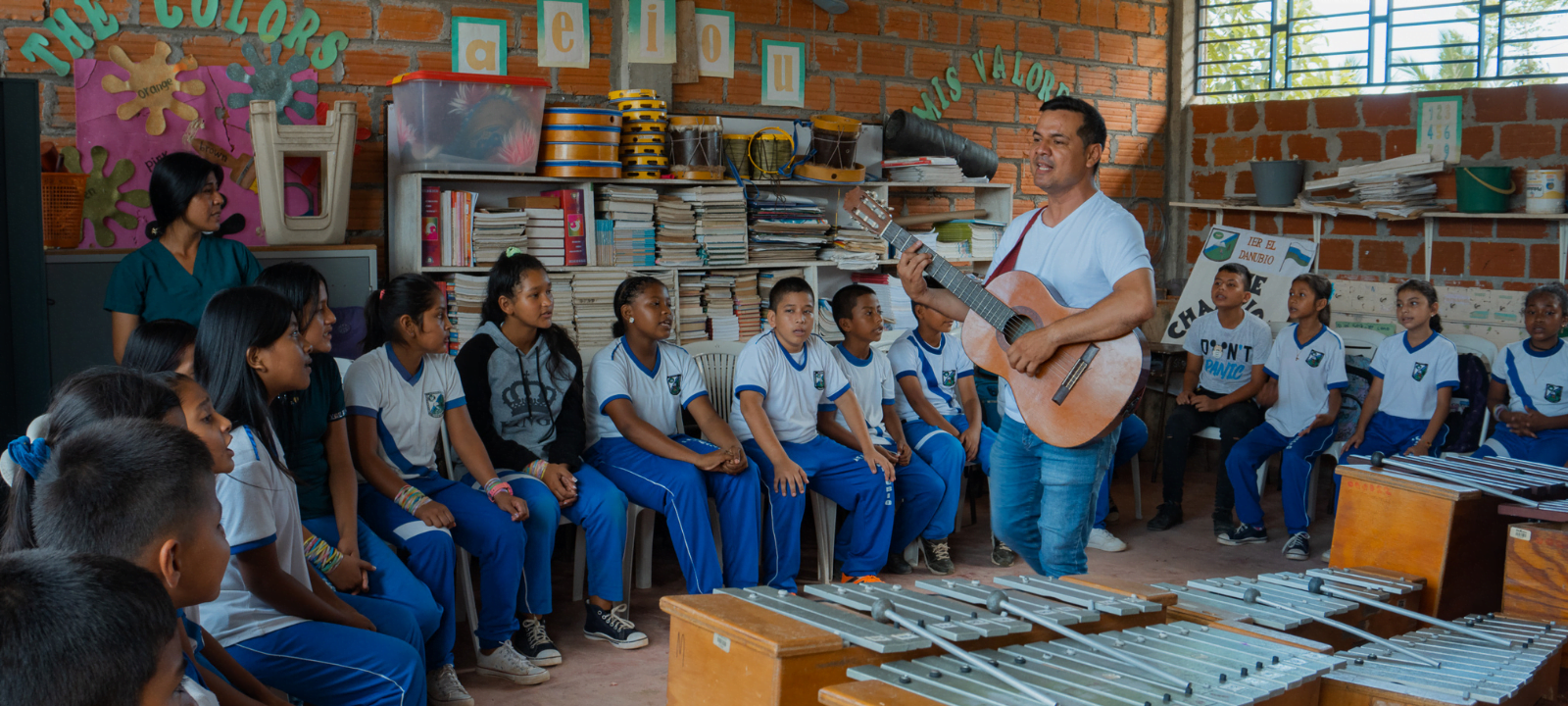
Young people are key to challenging exclusion and injustice and should be at the forefront of global change and innovation. At the Kofi Annan Foundation, we facilitate youth engagement, ensure that their voices are heard and support their efforts towards peace and development.
Young people have the energy, creativity and idealism to challenge entrenched patterns of exclusion and injustice and should be at the forefront of global change and innovation. Even though young people are not a homogeneous group, they are uniquely placed to bring positive change in society. Social media and new technologies are embedded in young people’s lives, and that knowledge can be used to catalyze collective action.
Convinced of young people’s central role in addressing the most pressing challenges of today, the Kofi Annan Foundation facilitates their engagement, ensures that their voices are heard and supports their efforts towards peace
and development. Discover our projects to learn more about how we do it.
Projects
Youth + Peace
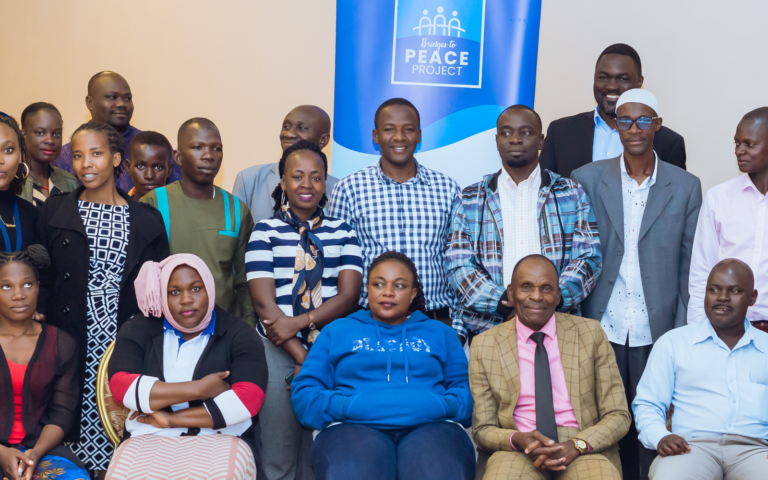
→Bridges to Peace Uganda
Preventing and Countering Violent Extremism and Terrorism in Uganda

→Peace Beyond Borders
Transforming communities from targets of violence into agents of sustainable peace and resilience

→Extremely Together
Empowering young people to build peace and prevent extremism

→Champions for Peace
Leading Change for Cohesive & Sustainable Futures

→Environment of Peace
Youth-Driven Research on Climate, the Environment and Peace
“Investing in youth is investing in the future.”
Ndugwa Hassan,
Extremely Together Leader


Contact us
Partner with us for an ongoing or future project.
Follow us on Social Media
Publications + Media
First published in
Peace Beyond Borders: Year 1 Progress Report 2025–2026
What does locally led prevention of violent extremism look like in practice? The Peace Beyond Borders Year 1 Progress Report captures the achievements, lessons and stories of change from the first year of our work in the Democratic Republic of the Congo and Uganda. From strengthening community resilience and supporting victims to building local prevention mechanisms and cross-border cooperation, the project is putting communities at the centre of efforts to prevent violent extremism. Funded by the European Union and implemented by the Kofi Annan Foundation in partnership with Prospect Initiative and Pole Institute, Peace Beyond Borders takes a whole-of-society approach…
First published in
Using Local Foods to Improve Nutrition in Benin: Marius’ Story
In northern Benin, malnutrition remains a serious challenge for many families. Women and young children are particularly affected by nutrient deficiencies, including iron deficiency, which can lead to anaemia and other long-term health problems. Across Benin, anaemia affects a large proportion of children under five, limiting healthy growth and development. Yet many of the food ingredients needed to improve nutrition already exist within local communities. Marius Affonfere believes local solutions can help address local challenges. A food and nutrition scientist from Benin, Marius has dedicated his work to improving the nutritional well-being of vulnerable communities. Through the LocalFood4Nutrition (LF4N) initiative,…
First published in
Growing Resilience in Uganda: Irene’s Story
In rural Central Uganda, many young people are growing up on the frontlines of climate change. Longer droughts, declining soil fertility, and increasing pest invasions make it harder for families to grow food. Most households rely on staple crops such as maize and beans, often grown only during the rainy season. Vegetables, which provide essential nutrients, are often missing from family meals. The result is a cycle of food insecurity and poor nutrition that affects young people’s health, education, and future opportunities. For Irene Nagudi, these challenges are impossible to ignore. An advocate for food security, agroecology, and sustainable development,…
First published in
Youth & Peace: Then & Now | Kofi Time with Hajer Sharief & Jeremy Gilley | Episode 7
In episode 7 of Kofi Time, podcast host Ahmad Fawzi welcomes two special guests, Hajer Sharief and Jeremy Gilley, to discuss the importance of youth inclusion in global challenges and peacebuilding. Sharing their experiences of meeting and working with Kofi Annan, Hajer and Jeremy highlight Kofi Annan’s ability to connect with young people, giving them […]
First published in
Making Peace: Then & Now | Kofi Time with Christiane Amanpour | Episode 2
In this episode of Kofi Time, host Ahmad Fawzi interviews renowned journalist Christiane Amanpour. Together, they discuss a world in turmoil, and what would Kofi Annan – who did so much for peace – do today? Christiane shares her thoughts on the ‘Kofi Annan way’, the difficult job mediators and peacebuilders face, and the courage […]
First published in
Mary Robinson: “The current failure of leadership is not gender neutral”
Mary Robinson, Chair of The Elders, delivered the Kofi Annan Peace Address during Geneva Peace Week 2024. Reflecting on Kofi Annan’s legacy and the current global leadership crisis in peace efforts, she called for greater respect for humanitarian law, and advocated for gender parity in leadership, emphasising the need for women’s inclusion in peacebuilding. Full Remarks from Mary Robinson Kofi Annan Geneva Peace Address, 15 October 2024. These remarks were first published by The Elders. Excellencies, Ladies and Gentlemen It is an honour and a pleasure to be with you here tonight in my capacity as Chair of The Elders to deliver the Kofi…
First published in
Appel d’urgence pour la paix
À l’occasion de la Journée internationale de la paix et avant le Sommet pour l’avenir, la Fondation Kofi Annan et Interpeace lancent un appel d’urgence pour la paix. Cet article a été publié dans Le Temps le 20 septembre 2024, sous la plume de Corinne Momal-Vanian et Itonde Kakoma. Nous vivons en temps de guerre. Et nous semblons nous y résigner. Le nombre des conflits armés est plus élevé qu’à n’importe quel moment depuis la fin de la Seconde Guerre mondiale[1] et les dépenses mondiales en matière de défense ont progressé pour la neuvième année consécutive en 2023, atteignant 2443…
First published in
Peace is possible: A call for action
This week, the United Nations reported that two million people, primarily women and children, have fled from Ukraine to neighbouring countries, in the fastest exodus on the European continent since the end of WWII. Thousands of men, women, children, and young soldiers – many still in their teens – have died or been injured. Cities have been flattened. Bridges, roads, schools, hospitals, and factories have been destroyed. Agriculture has come to a standstill in a land blessed with some of the richest soils on the planet. This is the scourge of war from which the founders of the United Nations…
First published in
Peace Beyond Borders: Year 1 Progress Report 2025–2026
What does locally led prevention of violent extremism look like in practice? The Peace Beyond Borders Year 1 Progress Report captures the achievements, lessons and stories of change from the first year of our work in the Democratic Republic of the Congo and Uganda. From strengthening community resilience and supporting victims to building local prevention mechanisms and cross-border cooperation, the project is putting communities at the centre of efforts to prevent violent extremism. Funded by the European Union and implemented by the Kofi Annan Foundation in partnership with Prospect Initiative and Pole Institute, Peace Beyond Borders takes a whole-of-society approach…
First published in
Using Local Foods to Improve Nutrition in Benin: Marius’ Story
In northern Benin, malnutrition remains a serious challenge for many families. Women and young children are particularly affected by nutrient deficiencies, including iron deficiency, which can lead to anaemia and other long-term health problems. Across Benin, anaemia affects a large proportion of children under five, limiting healthy growth and development. Yet many of the food ingredients needed to improve nutrition already exist within local communities. Marius Affonfere believes local solutions can help address local challenges. A food and nutrition scientist from Benin, Marius has dedicated his work to improving the nutritional well-being of vulnerable communities. Through the LocalFood4Nutrition (LF4N) initiative,…
First published in
Growing Resilience in Uganda: Irene’s Story
In rural Central Uganda, many young people are growing up on the frontlines of climate change. Longer droughts, declining soil fertility, and increasing pest invasions make it harder for families to grow food. Most households rely on staple crops such as maize and beans, often grown only during the rainy season. Vegetables, which provide essential nutrients, are often missing from family meals. The result is a cycle of food insecurity and poor nutrition that affects young people’s health, education, and future opportunities. For Irene Nagudi, these challenges are impossible to ignore. An advocate for food security, agroecology, and sustainable development,…
First published in
A Memory of 9/11, by Alan Doss
When two planes hit the World Trade Center on 9/11, I was half a world away in Sierra Leone. I was working there for the UN peacekeeping mission set up to help end the brutal civil war in that country. Part of my job was to plan and mobilise aid for national recovery in anticipation of the end of the war. On 9/11, together with UN agency colleagues, I met in Freetown with a visiting diplomat to discuss how his government could contribute to the post-war effort. During the meeting, a member of my staff appeared and whispered in…
First published in
Women’s Rights held hostage in Libya – The Geneva Observer
The Geneva Observer spoke to Extremely Together leader Hajer Sharief on the topic of women’s rights in Libya, where the country’s first female foreign minister Najla El-Mangoush is under pressure to leave after only seven weeks into the job. Hajer has been vocal in denouncing her country’s deeply ingrained culture of excluding women from politics, and for SUSTAINED, she analyses the future of SDG 5 in her homeland. The below is an edited version of an article that appeared in the May 13th edition of SUSTAINED – THE SDGs DECODED from The Geneva Observer. Women’s Rights Held Hostage in Libya…
First published in
Hajer Sharief and Ilwad Elman proposed as Nobel Peace Prize contenders
Geneva – Two Extremely Together Young Leaders, Libyan Hajer Sharief, 26, and Somalian Ilwad Elman, 29, are included in the Peace Research Institute Oslo (PRIO) Director, Henrik Urdal’s personal shortlist of possible contenders for the 2019 Nobel Peace Prize. President of the Kofi Annan Foundation Alan Doss states: “We are delighted to see the extraordinary work of young people from around the world receiving recognition in this way. We are particularly proud that two Young Leaders from our youth initiative Extremely Together are on Mr Urdal’s personal shortlist.” Hajer and Ilwad are important catalysts for peacebuilding and combatting and preventing…
First published in
Geneva Peace Talks
Every year, the International Day of Peace is observed around the world on 21 September. The United Nations General Assembly has declared this a day devoted to strengthening the ideals of peace, both within and among all nations and people. The Geneva Peace Talks are a public event co-organized by the United Nations Office at Geneva, Interpeace and the Geneva Peacebuilding Platform to celebrate the International Day of Peace. This year’s edition is held in partnership with the Kofi Annan Foundation, the Geneva International Centre for Humanitarian Demining, the Geneva Centre for the Democratic Control of Armed Forces and the Global…
First published in
Introducing Extremely Together's Jonah Obajeun of Nigeria
Jonah expresses his hope for a world where young people can live together peacefully and diversity is valued as a strength.
First published in
Introducing Extremely Together's Arizza Nocum of the Philippines
Arizza on the role of education in countering violent extremism and understanding the root economic and social causes which lead to extremist ideologies.
“Any society that does not succeed in tapping into the energy and creativity of its youth will be left behind.”
Kofi Annan