Like many legislatures around the world, Kenyan County Assemblies develop and pass laws but give little attention to subsequently assessing their impact.
Without Post-Legislative Scrutiny (PLS), communities are left with policies that may never be evaluated for impact, inclusivity, or effectiveness. This gap can be especially harmful for marginalised groups. PLS is the practice of monitoring the implementation of laws and evaluating their impact. Its aim is to ensure that laws benefit citizens as originally intended by lawmakers.
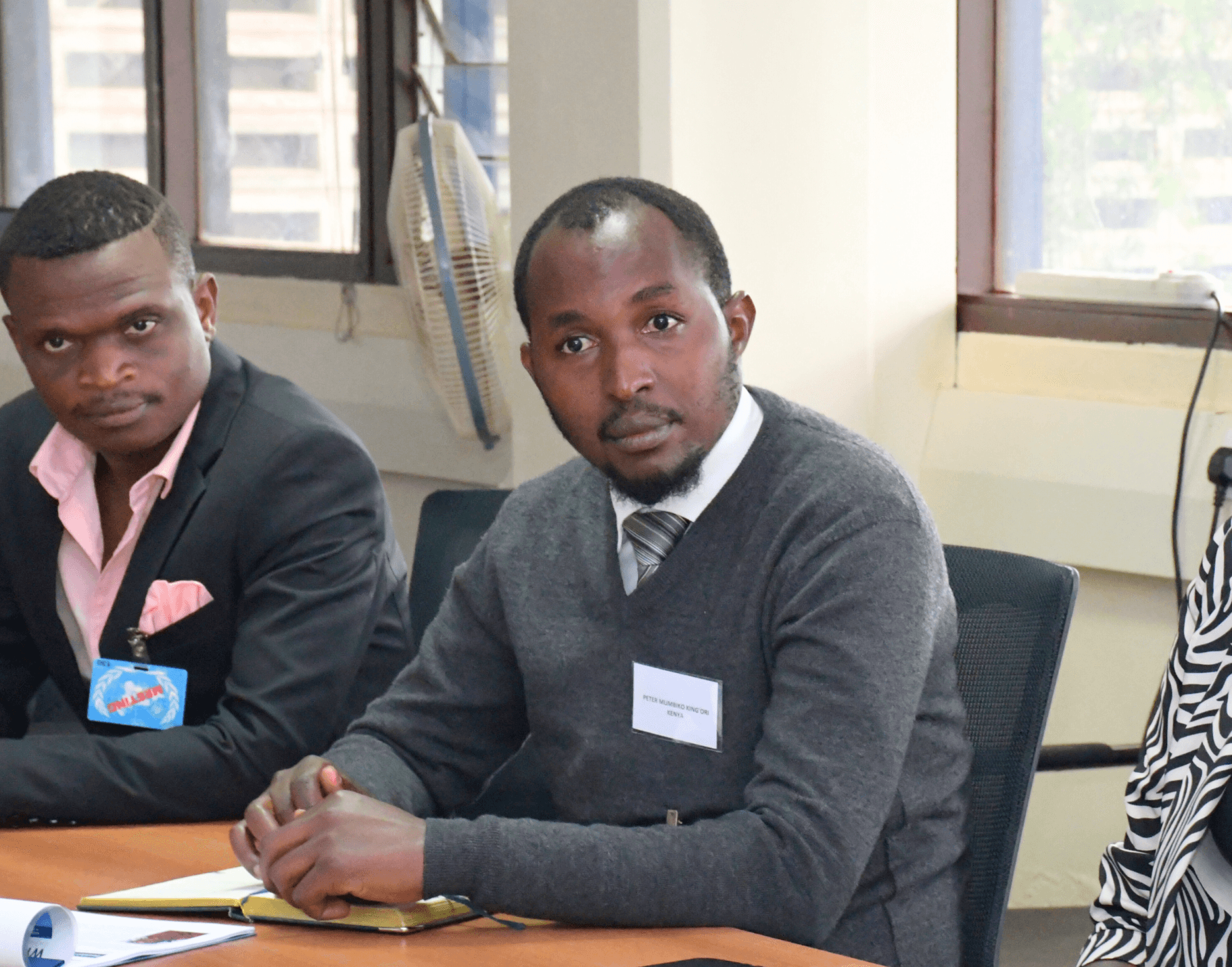
Recognising this challenge, Mumbiko Kingnori, a young leader within the WYDE Accountability Hubs programme, set out to bring PLS to the Nairobi City County Assembly.
A call to accountability
Mumbiko’s journey began during the Accountability Hubs’ financial accountability classes, where he first encountered the concept of PLS. Immediately, it struck a chord.
“I realised that lawmakers typically pass a bill and move on,” he explains. “There was no mechanism to check if these laws were actually serving people.”

This conviction led him to champion PLS Mashinani: a grassroots scrutiny initiative focused on evaluating whether laws genuinely empower women, youth, and persons with disabilities.
Note: “Mashinani” is a Swahili word that means local or grassroots
The credibility to engage
To turn his idea into a credible public-interest initiative, Mumbiko drew on support from the WYDE Accountability Hubs.
Mumbiko highlighted how instrumental the partners’ institutional backing was. This support was “not just financial, it was a mandate,” providing the credibility and trust needed to engage the Nairobi City County Assembly and drive a technical evolution of key legislation. Backed by this legitimacy, he could develop a methodology rooted in global PLS standards while tailoring it to Kenya’s devolved context.

Building Kenya’s first PLS Mashinani model
With the Nairobi City County Assembly, Mumbiko launched a structured, multi-stage process to introduce post-legislative scrutiny.
The focus was the Nairobi City County Public Participation Act (2015) – the foundation of citizen involvement in local governance.
Key activities included:
- Institutional planning and buy-in
An initial meeting with the Clerk of the Assembly secured support and established the scope of collaboration. - Official project launch
Stakeholders from the Assembly, civil society, and WYDE partners convened to introduce Kenya’s first youth-led devolved PLS pilot. - Training legislators and technical teams
15 County Assembly Members and technical staff were trained on PLS principles, methodologies, and scrutiny tools. - Data collection and stakeholder engagement
Through interviews, document reviews, and focus groups, the team gathered evidence to assess whether the Act supported meaningful participation – especially for marginalised groups. - PLS youth champions webinar
34 youth, women, and persons with disabilities shared lived experiences with participation processes. - Subcommittee validation
A PLS Mashinani Subcommittee — including elected youth and women representatives — validated findings and refined recommendations. - Report and policy brief launch
Partners from WYDE Accountability Hubs, local offices, and youth groups attended the unveiling of the PLS Inquiry Report and Policy Brief.
Transformative impact on county governance
The project delivered several landmark achievements. It completed Kenya’s first sub-national PLS inquiry, using a model that could now be replicated across all counties. The resulting PLS Inquiry Report identified gaps in the implementation of the Public Participation Act and proposed concrete amendments to improve its accessibility.
The accompanying Policy Brief translated these findings into actionable, concise recommendations for the Assembly.
One of the most innovative contributions was the proposal to digitise public participation. Because meetings are typically held in person on weekdays, they unintentionally exclude working youth, caregiving mothers, and people with limited mobility. Mumbiko’s team recommended a hybrid system that would allow greater accessibility and inclusion, ensuring that all can exercise their right to participate.
The establishment of the PLS Youth Champions group marked another major milestone. These trained young leaders, including women and persons with disabilities, joined the broader global PLS Community of Practice — ensuring continued learning and collective advocacy beyond the project timeline.
Meanwhile, training for legislators and staff built internal capacity within the Assembly, ensuring that PLS can continue independently.
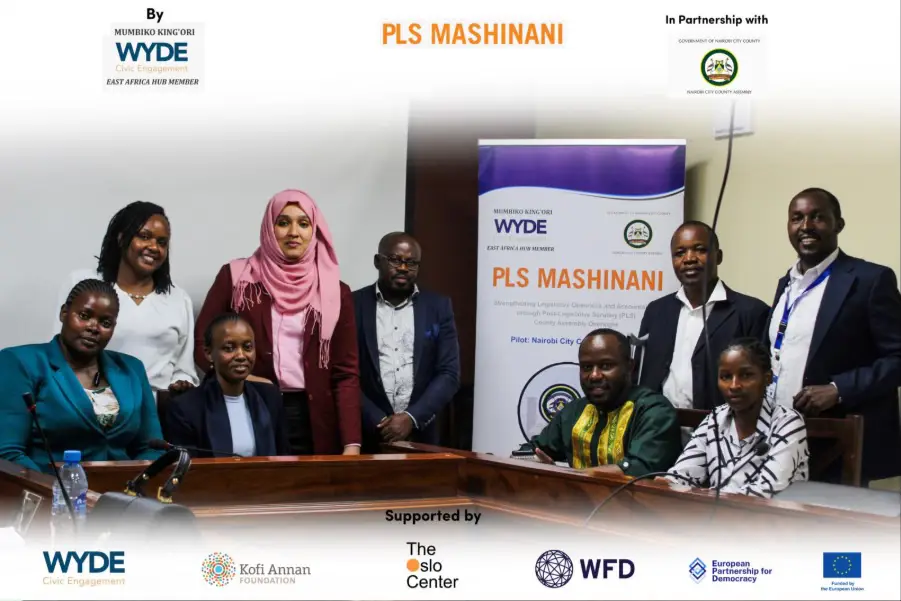
“What makes me proud is that we didn’t just write a report. We trained the Assembly staff and legislators. The practice of PLS will continue long after the project concludes. That’s sustainability.”
The project demonstrated that a youth-led initiative can deliver rigorous, technical, legislative oversight at the highest county level — reshaping expectations of what young people can achieve in governance.
Lessons, inclusion, and the road ahead
Despite political delays, staffing pressures, and limited data, the team adapted through flexible timelines, virtual engagement, and targeted outreach to ensure inclusive participation
Looking ahead, Mumbiko emphasises that the pilot was only the beginning.
His immediate focus is on ensuring that the Nairobi City County Assembly adopts the recommendations made in the Policy Brief and incorporates PLS into its Standing Orders as a regular oversight function.
“We are moving from a successful pilot to national change. The goal is to partner with institutions to scale the PLS Mashinani model across Kenya. This is how we fulfil the promise of accountable devolved governance.”