Young people living in Kampala’s underserved communities face systemic discrimination, tough economic challenges, and few spaces to express themselves.
In Kampala’s Bwaise community, one of the most densely populated and economically deprived neighbourhoods in the capital, the barriers feel especially insurmountable. The youth of Bwaise have long been overlooked and their voices ignored.
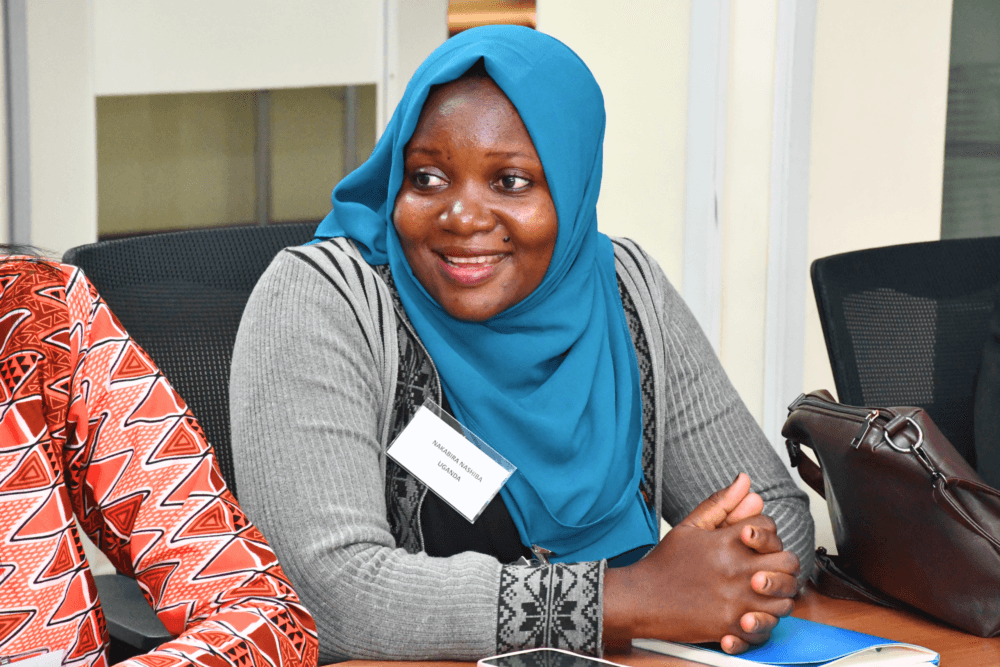
The Youth Speak initiative from Nashiba Nakabira was created to challenge these barriers — and to help young people make their political voice heard.
A fight against marginalisation and misunderstanding
Young people in Bwaise are often reduced to stereotypes. “They’re called criminals, troublemakers, chaotic,” says Nashiba Nakabira. “But I come from a ghetto community. That is where I live…I have seen these young people have talents but continue to be marginalised.”
These negative stereotypes run deep and mean young people are often shut out by political elites. Many of these young people are “endowed with talents,” yet “little effort has been incurred in identifying and nurturing these talents or using them to foster civic awareness.”
This personal connection lit the spark that led her to design Youth Speak, a project aimed at building civic consciousness among young people in Bwaise and providing them with platforms to use their talents for change.
Turning talent into civic power
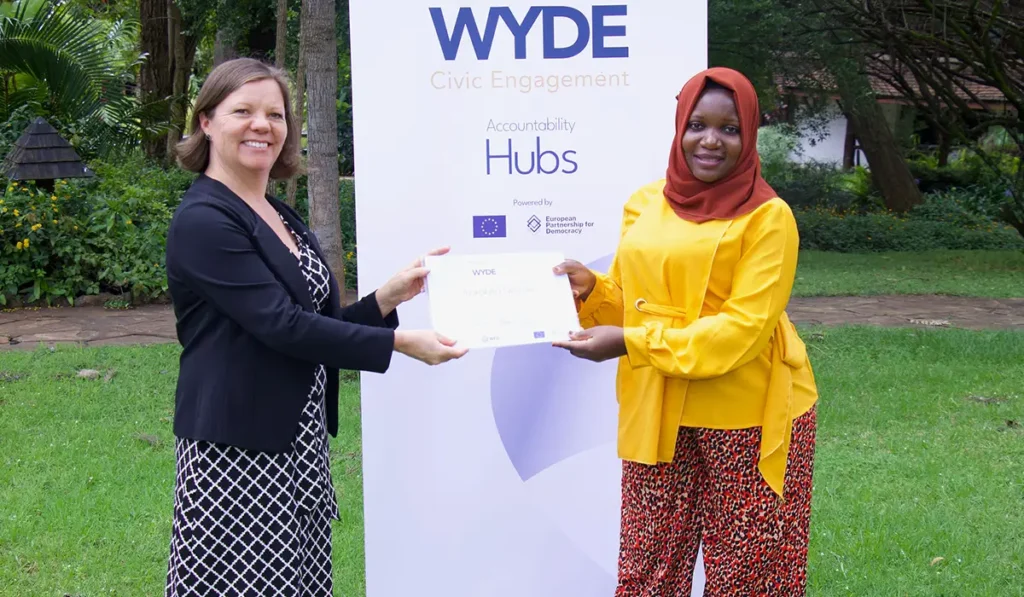
Armed with new skills thanks to the Accountability Hubs programme, and a clear mission, Nashiba, with the backing of her organisation – African Youth Development Link – launched Youth Speak in Bwaise.
She selected ten young people from the community who had a flair for music, art, or sports and were willing to use their talents to spread civic awareness. The group included men, women, and persons with disabilities, united by a shared passion for music, art, or sport.
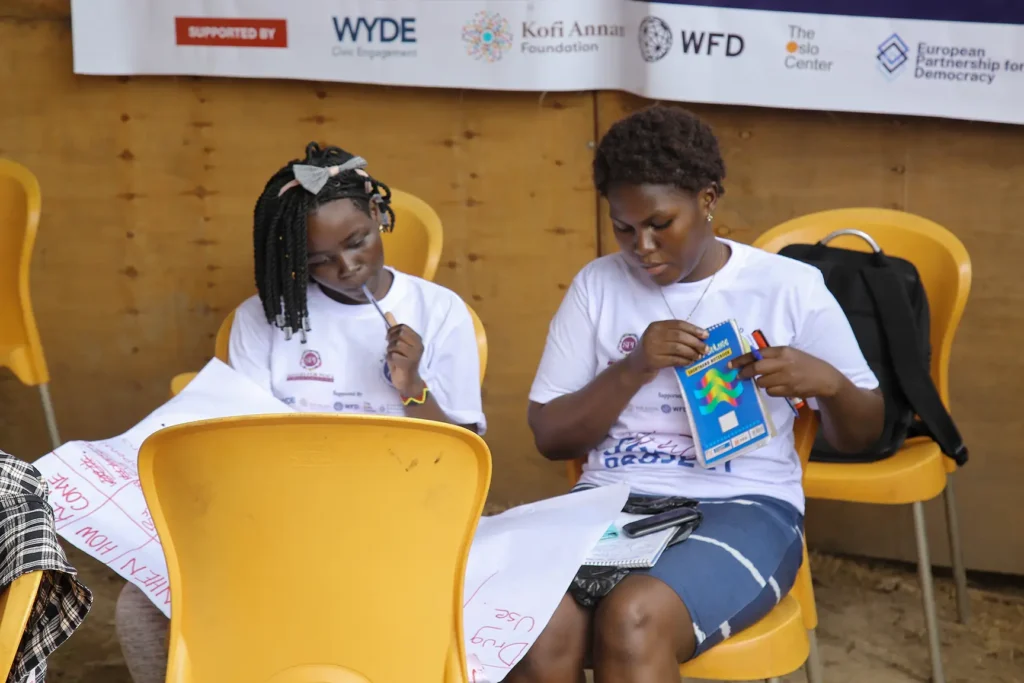
To make space for the young people, Nashiba created a one-week intensive learning experience centred around:
- Awareness of civic rights and responsibilities
- Leadership
- Active citizenship
- Communication
The sessions were hands-on, deliberately relatable, and shaped around real experiences from Bwaise. While primarily led by the African Youth Development Link, participants also had the opportunity to analyse community conflicts with the help of the Sisters 4 Peace Initiative and to explore skills-development pathways with Action for Fundamental Change and Development.
The group were then supported to brainstorm creative ways to use their talents to drive civic awareness, leading to vibrant song and dance numbers being written and performed, including Nashiba art and music (.mp4) and Ghetto Youth Civic Anthem (.mp3)
The timing coincided with a nationwide registration drive for National IDs, and the project used the opportunity to explain how IDs allow young people to access essential services.
“We saw young people turn up in very big numbers to be able to register, which previously wasn’t the case.”
Nashiba viewed this as a sign of increasing institutional and political engagement. Through Youth Speak, the young changemakers were sharing messages about the importance of engagement and participation, and their peers seemed to be listening.
Unlocking confidence, visibility, and new leadership
As the programme unfolded, the transformation became evident.
Participant Seif Mukalazi reflected on the project’s impact, saying, “What I have learnt from the Youth Speak Project is that we can use our talents to talk about the challenges young people face in our communities.”
Another participant, Namatovu Babra Gabbie (the youngest in the group) shared, “I gained a lot from this project, but the main benefit was confidence.” As Nashiba explained,
“Our participants now believe in their capacity and their civic mandate. They know they can use their talents to amplify their civic voices.”
Beyond individual stories, the broader community began changing, too. Young people, once dismissed as disruptive, were now being recognised and included by political actors. Some were hired to create campaign messages to support individual political parties and candidates.
Others were recruited by civil society groups as coordinators and mobilisers. One participant, Muteesasira Robert, even began vying for a leadership position in his community.
She adds that even government institutions, including the Uganda Electoral Commission, have taken steps to strengthen collaboration with young people. Her own organisation was recognised as “the leading youth entity” and was tasked with conducting voter education for young people.
Lessons learned and what comes next
Reaching this point wasn’t simple. Many participants lacked stable employment, making consistent attendance difficult. High expectations for financial support had to be gently reset. But by adapting the training timeline, staying flexible, and keeping communication honest, the project found its rhythm.
The momentum hasn’t slowed. Those involved in the programme have created a Civic Ambassadors group to continue their civic campaigning to engage youth. Nashiba herself continues to use radio, TV, TikTok, and community forums to amplify civic messages.
Her organisation, the African Youth Development Link, has been recognised by the Ugandan Electoral Commission as the leading youth entity conducting voter education. The Youth Changemakers developed and launched a youth manifesto 2026-2031, which was recently endorsed by the President of Uganda.
A future built on voice and visibility
Youth Speak shows what becomes possible when young people are trusted, trained, and given the space to lead. The Bwaise Youth Civic Ambassadors are now active civic educators, visible leaders, and creators of their own civic narrative.