In Mali, corruption has long seeped into everyday life. It corrodes institutions, schools, and public services. In lecture halls as much as in markets, bribes and favouritism seem unavoidable.
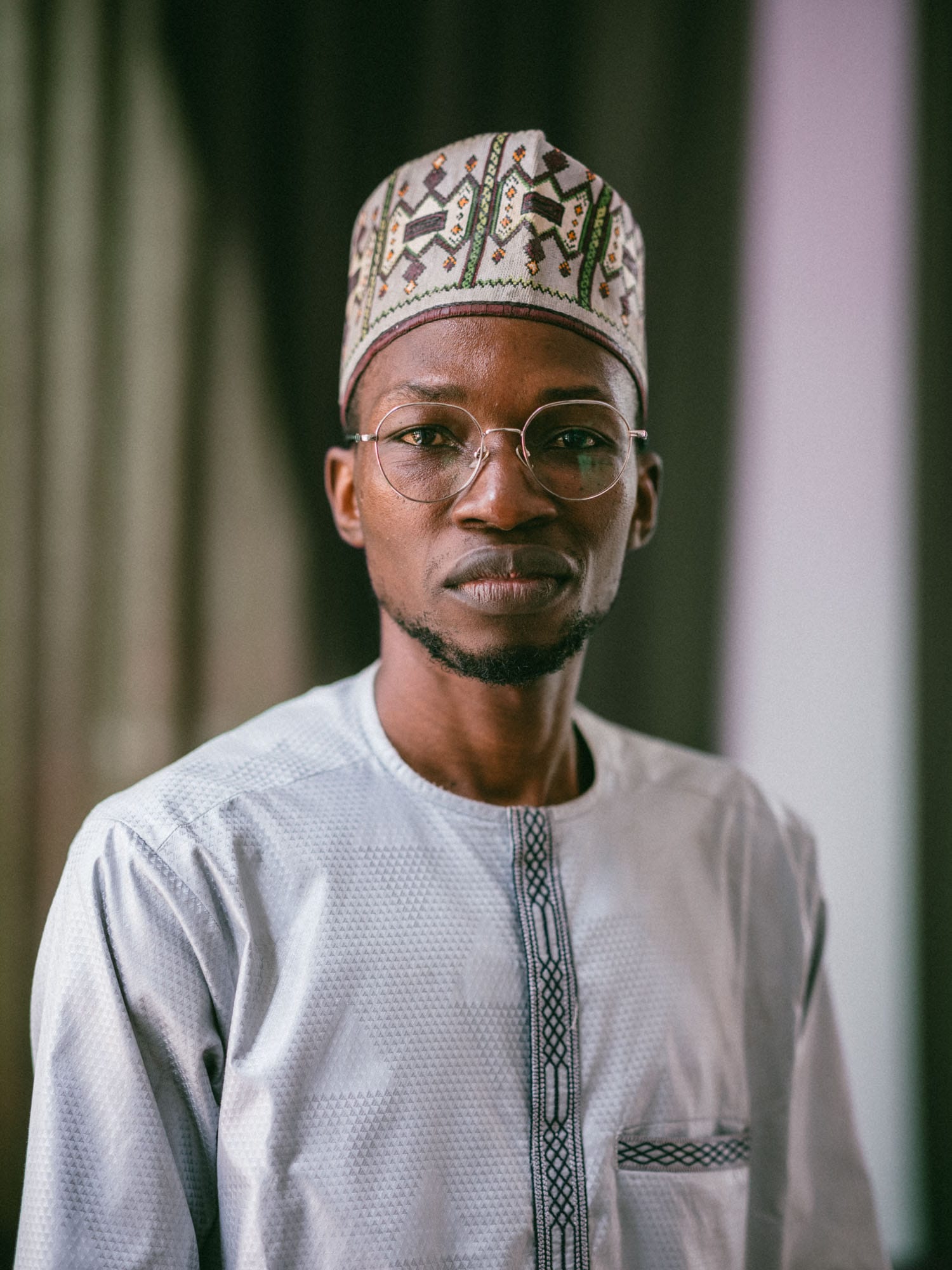
For many young people, the system feels locked. You have to “know someone” or pay to have any hope of moving forward. But some refuse to accept this reality. Among them is Ismaïla Yalcouyé, a young civil society actor in Bamako, who turned his frustration as a student into a lasting commitment to public integrity.
A turning point and a conviction
“Back in high school, I watched teachers skip class without any consequences. At university, we had to bribe members of the student association just to receive our small cash allowance on time. It was a shock,” explains Ismaïla.
That shock stayed with Ismaïla. As a student journalist, he realised that access to information was the first real weapon against corruption. Gradually, he came to a clear conviction: building an ethical Mali starts with equipping young people to take action themselves.
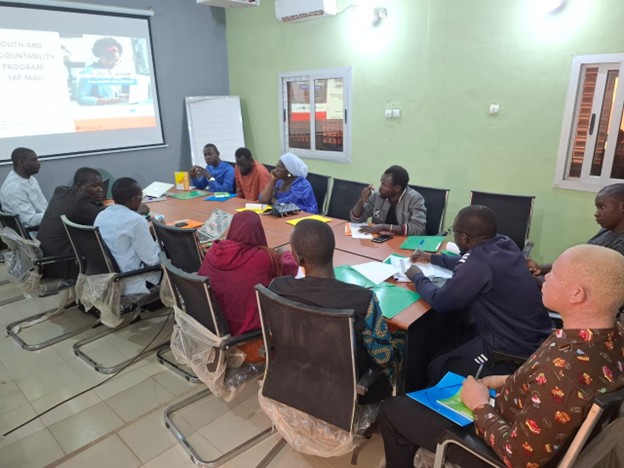
It is this vision that led him to apply for the WYDE Accountability Hubs programme. Through the programme, he strengthened his skills in ethical leadership, project management, advocacy, and citizen-focused communication.
“The Accountability Hubs programme has given me not only the means to act, but also a network of allies who share the same ambition.”
Training and mobilising young people
This project is the direct result of a seed grant from the WYDE Accountability Hubs programme, which enabled the creation of the Youth and Accountability Program (YAP Mali). The initiative is designed to train and mobilise a new generation of young people and women who are ethical, responsible, and engaged.
Since its official launch in July 2024, YAP Mali has drawn unexpected attention. The call for applications received more than 600 submissions from across the country, a clear sign of a genuine thirst for civic engagement among Mali’s youth.
Twenty young people, 50% women and 50% men, were selected for an intensive training program in Bamako on ethical leadership, active citizenship, advocacy, and public accountability. For Ismaïla Yalcouyé, the initiative goes beyond mere awareness-raising: “Change starts with ourselves. If we, the youth, refuse to condone corruption, even in the smallest ways, we can inspire an entire country,” he explains.
“Change starts with ourselves. If we, the youth, refuse to condone corruption, even in the smallest ways, we can inspire an entire country.”
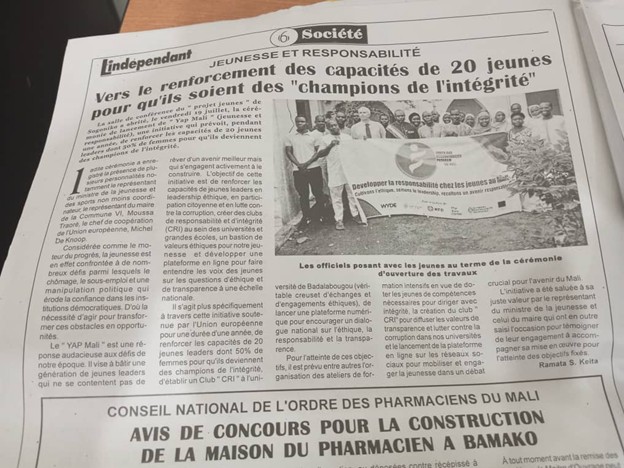
The initiative quickly caught the media’s attention. The daily L’Indépendant ran the headline: “Building the Capacity of 20 Young People to Become Champions of Integrity.”
Michel De Knoop, Head of Cooperation at the European Union Delegation in Bamako, praised the effort as “a project that supports committed, enthusiastic young people who want to give their best for a Mali that moves forward.”
The training sessions, assessed through pre- and post-tests, revealed remarkable progress. For many, it was the first time they discovered that leadership could exist without compromise.
At the end of the programme, the participants decided to create the Club of Responsibility and Integrity (CRI), an independent space where they could organise, debate, and design their own local initiatives.
The club elected Ilias Sacko, a young person with a motor disability, as its leader, a powerful symbol of inclusion and resilience. Quickly, CRI members began organising discussion forums, radio programs, and awareness campaigns across Bamako’s neighbourhoods.
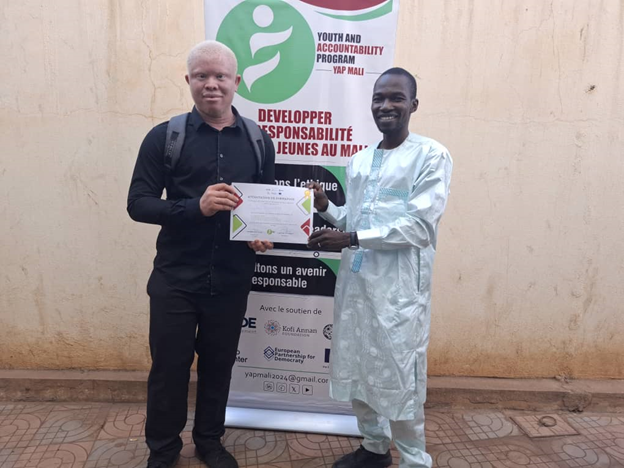
Without any additional funding, they implemented a small action plan fueled by solidarity and creativity. Three young people with disabilities actively participated, demonstrating that the fight against corruption and the pursuit of inclusion can go hand in hand.
“I used to think that the fight against corruption was something for adults. Today, I know it begins with my own actions as a young person,” said Ilias Sacko, President of CRI Mali.
Exceeding expectations
The impact of YAP Mali exceeded Ismaïla’s expectations:
- Some participants now host citizen-focused programs on local radio stations.
- Others, like Djeneba Sacko, have become active within the National Network of Rural Girls.
- And Maïga, another participant, took the practices he learned and applied them during a mission in Morocco.
For Ismaïla, the most meaningful achievement remains the voluntary continuation of CRI’s activities.
“It’s the members themselves who reach out to me, who keep taking action even without funding. That’s the real proof that the message got through,” he emphasises.
Lasting and transformative impact
Beyond the collective impact, WYDE Accountability Hubs transformed Ismaïla’s own trajectory. Shortly after the project ended, he was recruited as a national anti-corruption specialist with UNDP Mali.
“The programme helped me not only structure my ideas, thanks to the training and mentoring sessions, but also shift from activism to strategic action. This project opened doors for me, but above all, it reminded me that integrity is a daily commitment,” he says.
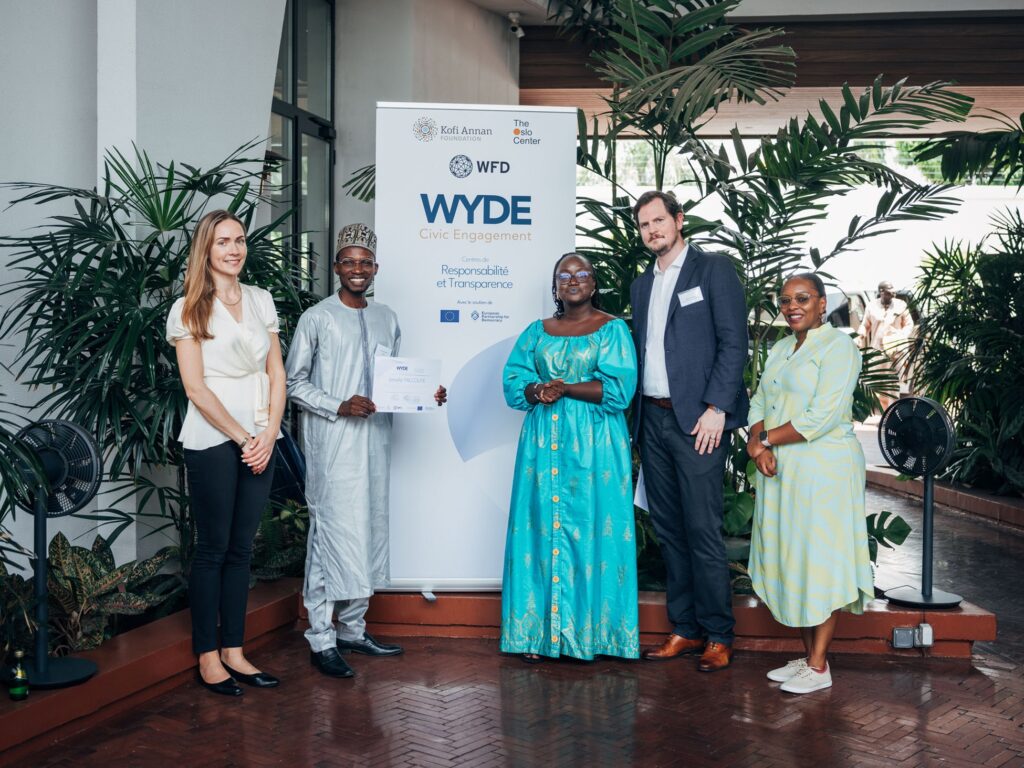
Today, Ismaïla is working to expand the CRI model to other regions of Mali, with support from the Ministry of Youth and partner organisations like Accountability Lab. His ambition is clear: to build a national network of integrity ambassadors, capable of “inoculating” Malian society against the normalisation of corruption.
“Young people are not tomorrow’s problems. They are today’s solution.”
YAP Mali did more than train twenty young people. It sparked a lasting movement of integrity, inclusion, and civic leadership.
In a country where youth are often seen as discouraged, these young people prove that with little resources but strong conviction, integrity can become contagious.
For Ismaïla Yalcouyé, this momentum holds the promise of the future. What gives him hope, he says, is the growing awareness among young people of the challenges of governance, transparency, and accountability, and the active role they recognise themselves as playing.
More and more young people are daring to engage, question, propose, and act for a fairer, more ethical Mali, a clear sign that real change is underway.