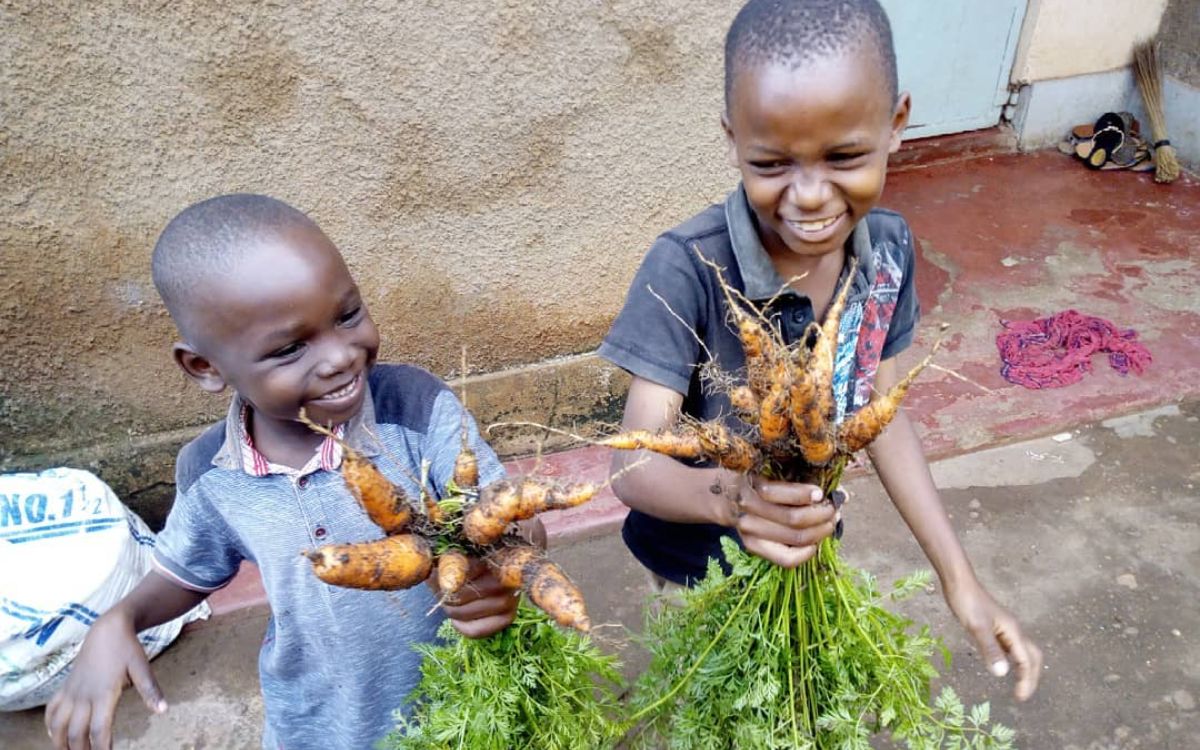
At the Kofi Annan Foundation, we support youth in their actions to tackle one of the biggest threats of their generation: the climate emergency. Disasters and extreme weather are heightened by climate breakdown, impacting livelihoods, homes, agriculture and more. Empowering young changemakers and helping them make a difference to tackle those issues is one of our missions.

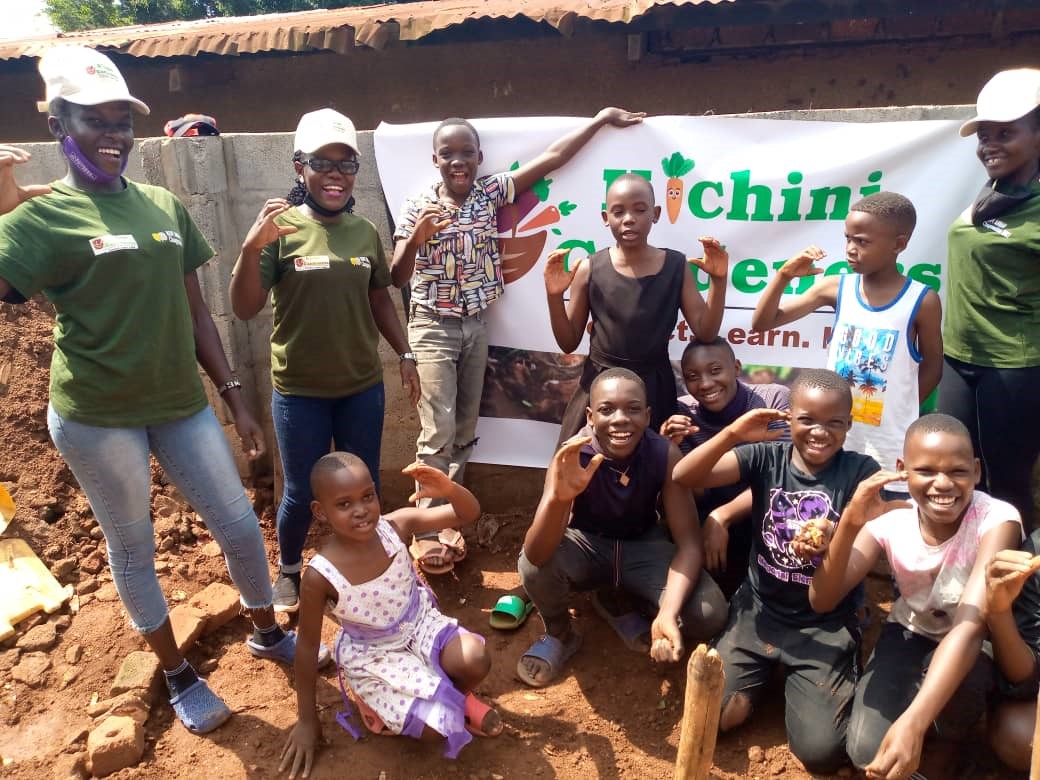
One such young leader is Irene Nagudi, a 2021 Kofi Annan Changemaker, who plans to educate over 200 young children in small-scale gardening activities through her ‘Kichini Gardeners’ project in Uganda.
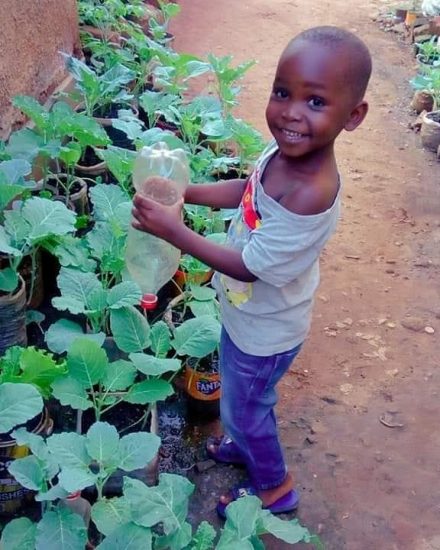
Irene’s project teaches young children about nutrition and gardening, helping them understand the positive effect of biodiversity on climate change and how their actions can help create a more sustainable future.
As an Environmental Scientist, Irene and her team develop and disseminate technical information in an accessible way.
The materials developed by Irene and her team provide six- to fourteen-year-olds with information about gardening and growing their own food, and explain the role of young people in climate action and the value of togetherness in Biodiversity conservation. For instance, she explains that eating locally-grown produce can significantly reduce greenhouse gas emissions.
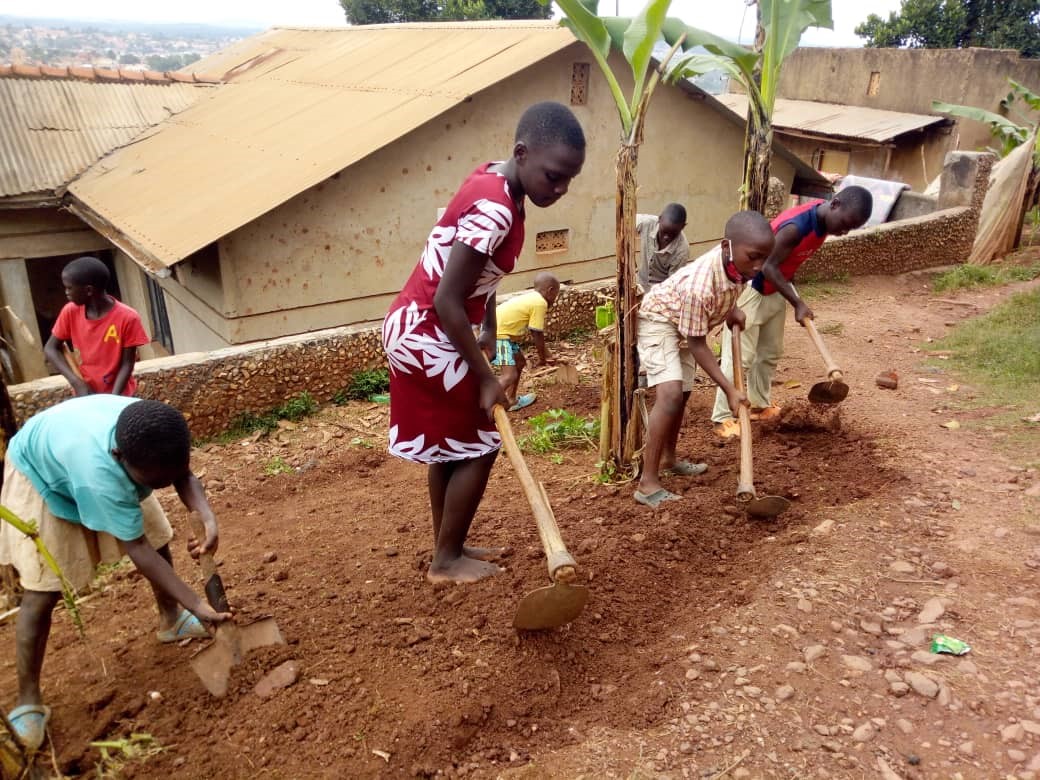
The Kichini Gardeners project plans to open 100 organic gardens in homes and schools and set up fruit-tree planting in the local area. With this, young children can improve their knowledge of nutrition, understand the importance of green spaces in climate action and learn the basics of setting up and looking after a garden from an early age.
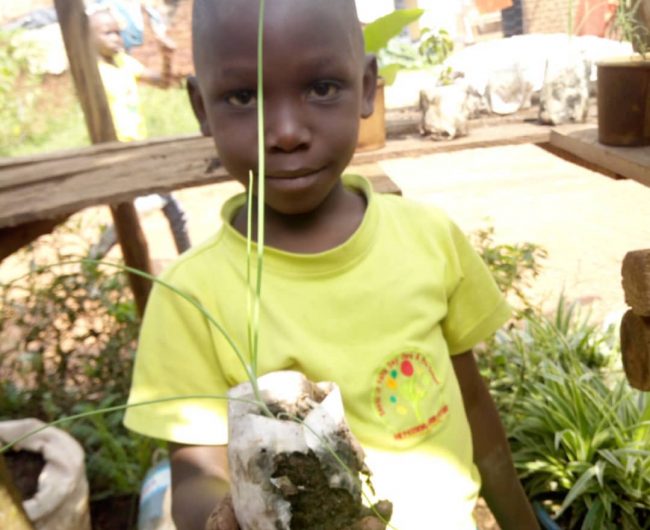
“Soil is a way of connecting with our kids – and nature!”
In Kireka, the local area where Irene lives, very few people own land, so there is less opportunity to own a garden. The Kichini Gardeners project gives children in the area the chance to experience having ‘green space’ and learn about the importance of soil, water, and species conservation. Irene hopes this will increase youth awareness and participation in environmental protection in the region and, in turn, across Africa.
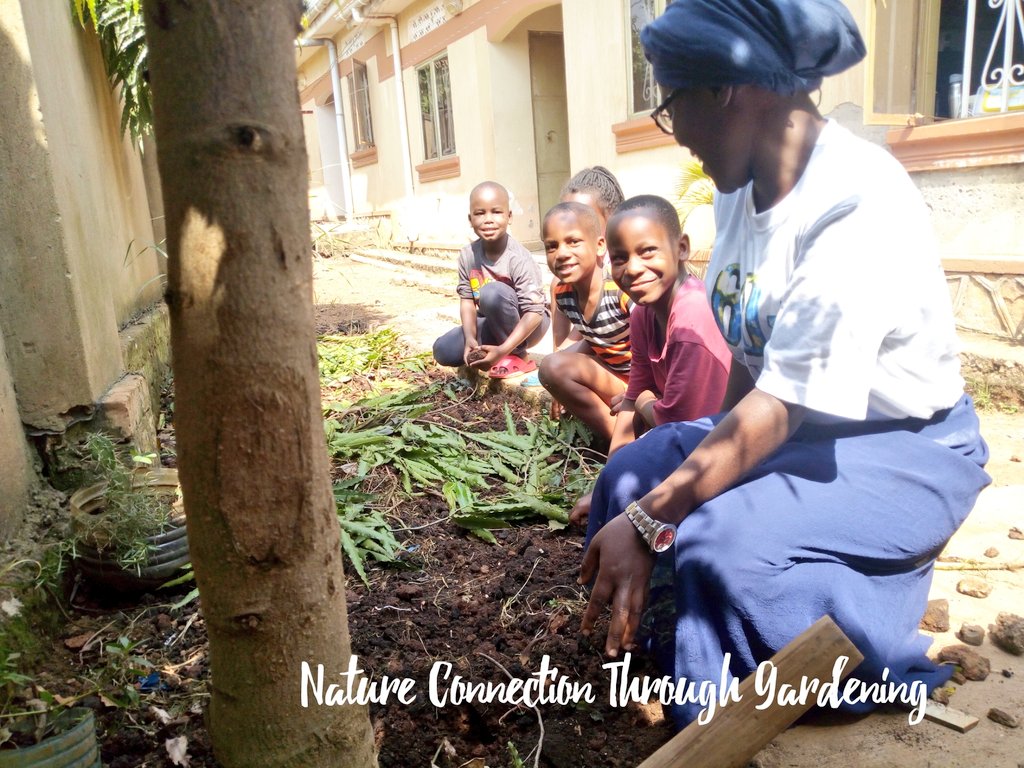
Improved waste management
In addition to sharing practical information, such as introductions to gardening and composting, Irene and her project team also work with local authorities to develop and share information with the public on collecting, sorting, and recycling waste. Waste and the lack of understanding around how to manage it properly can further contribute to food insecurity in low-income countries such as Uganda.
For example, Irene and her team teach young people how to turn waste into manure to increase soil fertility, thereby supporting food production in their homes and reducing greenhouse gas emissions. Other activities are geared towards food security by composting kitchen waste and reusing plastics as irrigation containers and garden beds.
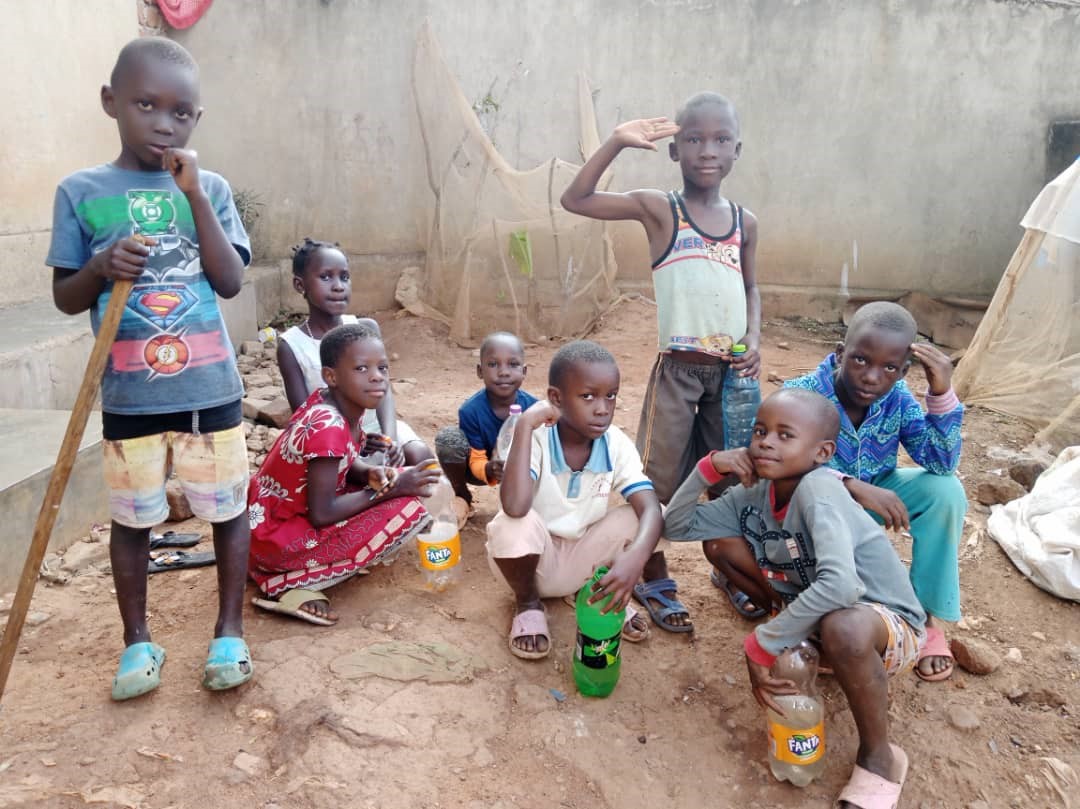
“Proper waste management is also a long-term nature protection issue. Composting and recycling of plastics is just the first step in addressing the real issue of poor solid waste disposal.” – Irene Nagudi
Nutrition solutions
Issues such as poverty, inequality, and extreme weather mean that farmers in low-income countries like Uganda cannot meet consumer demand. This means that most households are now ‘food insecure’ – a state of being without reliable access to enough affordable, nutritious food.
- Food insecurity has the most significant impact on childbearing women and children.
- Food insecurity is the leading cause of malnutrition in children.
- Malnutrition threatens to destroy an entire generation of children in Uganda.
- Because of malnutrition, more than one-third of all young children – 2.4 million – are stunted, and one-quarter of child-bearing-age women are anaemic.
In addition to protecting the planet, teaching young children how to own and run a garden can help combat malnutrition and food insecurity.
While world leaders are gathering to speak about what they can do on a policy level, we should also – like Irene – consider what we can all do in our own communities.