
For years, Nigeria’s governance landscape has been dominated by activity at the federal level, whilst states and local governments—the tiers closest to citizens—have remained largely overlooked in efforts to drive participatory, accountable, and transparent governance.
This disconnect has meant that the very people who should benefit most from public services often lack the knowledge, tools, and opportunities to hold their governments accountable. Young people, women, and persons with disabilities have been particularly excluded from meaningful participation in governance processes, leaving a critical disconnect between government action and community needs.
Seeing the gap, and choosing to act
Daisi Omokungbe, founder and executive director of PROMAD Foundation, recognised this gap and was determined to change it. As a civic technology organisation leader focused on data-driven solutions, Daisi saw an opportunity where others saw only obstacles.
“We reviewed the available data and realised that most interventions around participatory, accountable, and transparent governance have focused on the federal level, primarily targeting the national government,” Daisi explains. “The states were almost entirely neglected.”

This realisation led Daisi to design the Strengthening Participation, Accountability, and Transparency in States (SPATS) project. The vision was clear: empower young people, women, and persons with disabilities to understand their role in the governance process and actively drive accountability and transparency, particularly in budgeting and the implementation of public projects.
The support behind the vision
The SPATS project was supported through the WYDE Accountability Hubs programme seed grant.
For Daisi, the WYDE Accountability Hubs fellowship phase was instrumental in shaping the project, strengthening his knowledge and helping bridge gaps in mobilising young people for governance and accountability.
Training youth to lead accountability
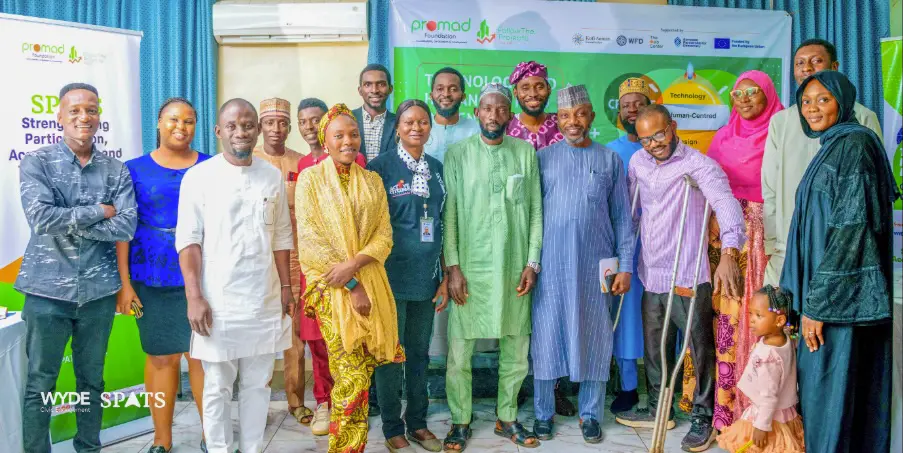
The SPATS pilot in Nasarawa State brought together 13 young leaders from across 13 local government areas. Through the Social Accountability Fellowship, these young people—including women and persons with disabilities—gained practical skills, including:
- Budget analysis, to understand how public funds are allocated and spent.
- Public procurement laws, to monitor government contracts and service delivery.
- Use of the Freedom of Information Act to request and access public information.
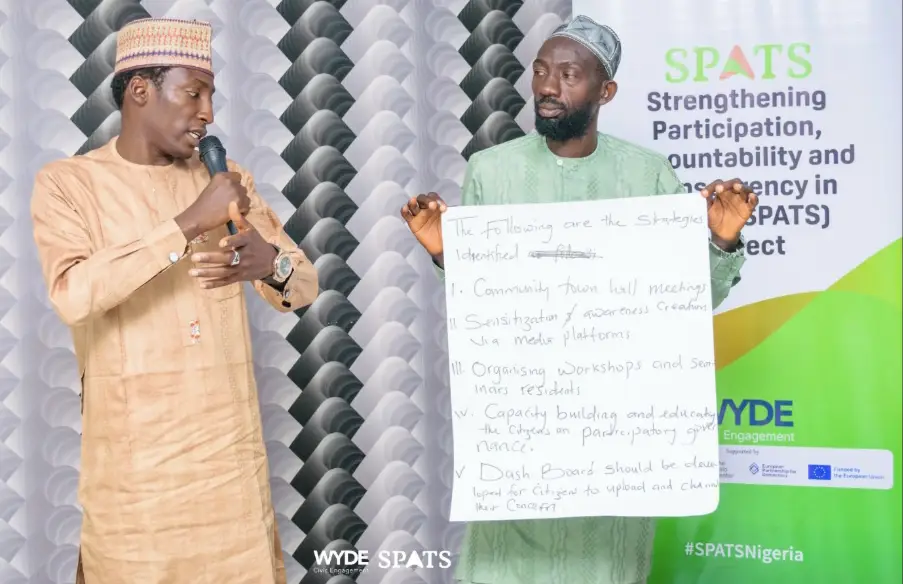
- Civic technology platforms, to track project implementation.
- Data analysis to support evidence-based advocacy and engagement.
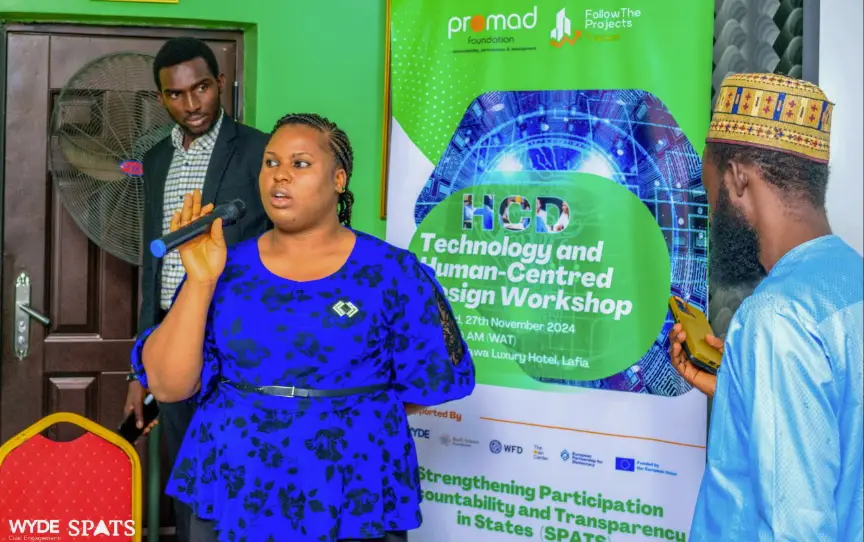
A cornerstone of the pilot was a needs assessment survey and human-centred design workshop that brought together young leaders, women, persons with disabilities, government officials, and civil society practitioners.
The workshop created a shared space for dialogue and collaboration, helping government officials appreciate how human-centred design can fast-track participatory, accountable, and transparent governance. By focusing on citizens’ lived experiences, the approach demonstrated how budgets, projects, and policies can better reflect the real needs of the people.
Empowering the next generation of civic leaders
The SPATS pilot achieved remarkable success in empowering a new generation of active citizens. The 13 young leaders trained in the fellowship are now cascading their knowledge throughout their communities, training others and driving accountability at the local level.
Beyond technical skills, the programme supported Fellows in refining their storytelling and advocacy capacities, enabling them to engage local government actors and articulate community challenges ethically, confidently, and effectively.
Collectively, the initiative empowered young leaders to spearhead grassroots initiatives that promote participatory governance and social accountability, helping to bridge existing governance gaps in Nasarawa State and foster a more informed, active citizenry committed to good governance.
The Social Accountability Fellowship proved “very strategic in addressing the needs of young people when it comes to participation in governance as well as driving accountability and transparency”, Daisi notes. Participants found the training “very crucial and rewarding,” effectively closing the knowledge gap that had prevented them from meaningful engagement with the government.
Perhaps most significantly, the project succeeded in its goal of empowering youth leadership and bringing government closer to citizens’ needs, creating new channels for communities to influence public policy and project implementation.
From pilot success to scaling nationwide
The success of the SPATS pilot demonstrates the critical importance of investing in young people’s ideas and leadership.
“It is very important for donor organisations and development partners—especially in Africa—to invest in young people. If we are to find solutions to our challenges, investing in young people—whether in the civic, entrepreneurial or private sector—is essential to moving Africa from where it is today to where we want it to be.”
Building on the pilot’s success, PROMAD Foundation has secured additional support from the WYDE Accountability Hubs project to expand SPATS to Ondo State, as well as funding from the Nigeria Youth Future Funds to implement the project across six North Central states and the Federal Capital Territory.
This expansion is empowering more young people to drive participatory, accountable, and transparent governance, and the team continues to seek additional funds and support to further scale the initiative nationwide.
Youth at the heart of change
The SPATS project demonstrates that when young people are given the knowledge, tools, and support they need, they become powerful agents of change in their communities. By focusing on state and local government—the levels closest to citizens—the project is helping to build a more participatory, accountable, and transparent Nigeria from the ground up.
As these young leaders continue to cascade their training and deploy civic tech tools across Nigeria, they are not just monitoring government—they are fundamentally reshaping the relationship between citizens and the state, ensuring that governance truly serves the needs of the people.