Since the adoption of its 1992 Constitution, Ghana has earned global recognition for its democratic stability, peaceful transfers of power, and commitment to constitutional rule. Yet beneath this success lies a troubling contradiction.
While democracy thrives procedurally, many young Ghanaians—who form the backbone of the nation’s population—have long struggled to make their voices heard on issues of governance and accountability.
Despite being deeply affected by policy decisions and governance failures, youth engagement has been constrained by limited access to safe, credible platforms for expression and by fears of political intimidation and victimisation. This gap has contributed to growing youth disengagement and weakened accountability, even as Ghana’s democratic promise endures.
A vision for youth participation
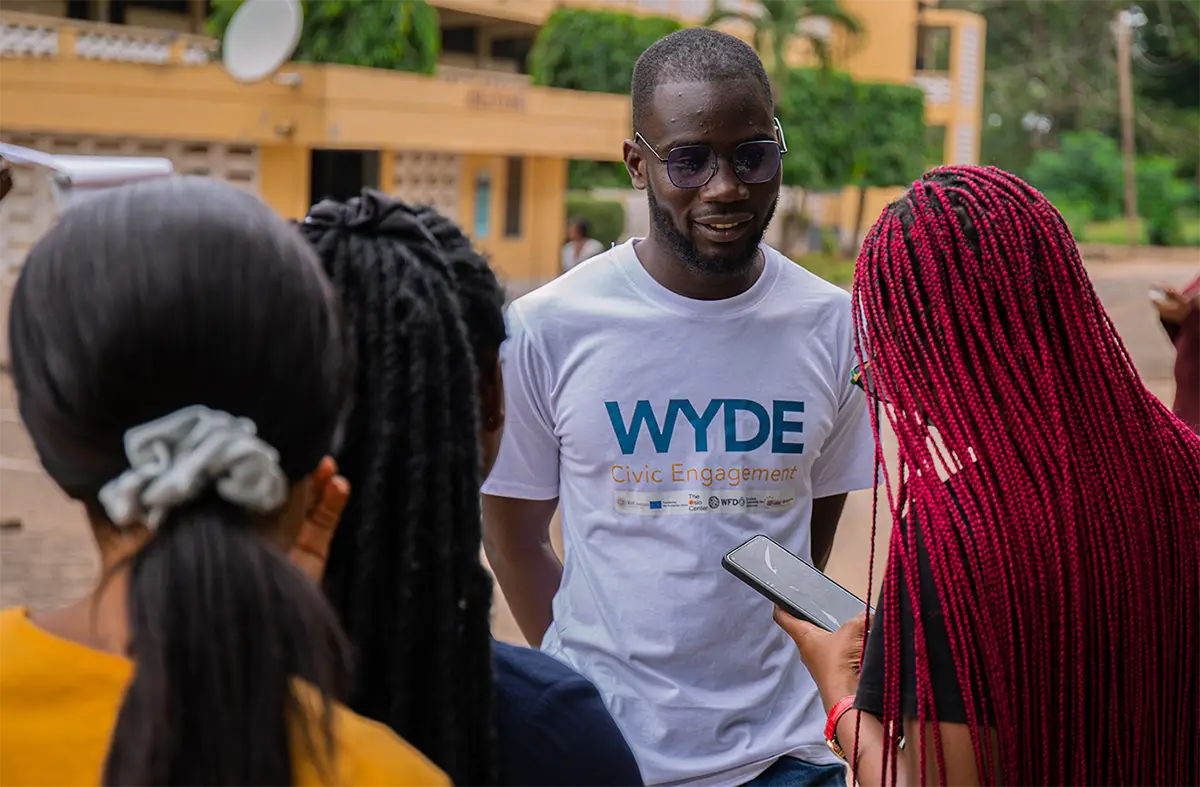
Prince Ossei Owusu has a long-standing commitment to youth empowerment, shaped by years of firsthand experience in youth leadership and civic engagement. These experiences affirmed his belief that meaningful youth inclusion is essential to national development and nation-building. Inspired by this conviction—and by former UN Secretary-General Kofi Annan’s words, “you’re never too young to lead”—Prince created the Youth Barometer.
The Youth Barometer project provides a platform for young people in Ghana to safely and meaningfully engage in issues of governance, accountability, and democracy, enabling them to share perspectives, raise concerns, and actively contribute to discussions on national issues that directly affect their lives.
Building skills, networks and confidence for impact
The Accountability Hubs programme provided crucial support and mentorship for Prince’s vision. Through the programme, Prince gained access to valuable opportunities that strengthened both his leadership capacity and the impact of his work.
These included high-level engagement with senior international actors, such as meetings with Ms. Zainab Hawa Bangura, Director-General of the United Nations (UN) Office at Nairobi, Kenya, and a former UN Rapporteur, which broadened his global perspective on governance and accountability. He also received project management training that equipped him with practical skills for designing, implementing, and delivering projects effectively to target communities.
In addition, the programme facilitated peer learning through connections with civil society organisations and young activists across the region who are leading transformative work in democracy and accountability.
Collectively, these experiences provided inspiration and validation, reinforcing the importance of youth-led initiatives in holding governments accountable.
Giving young voices a platform
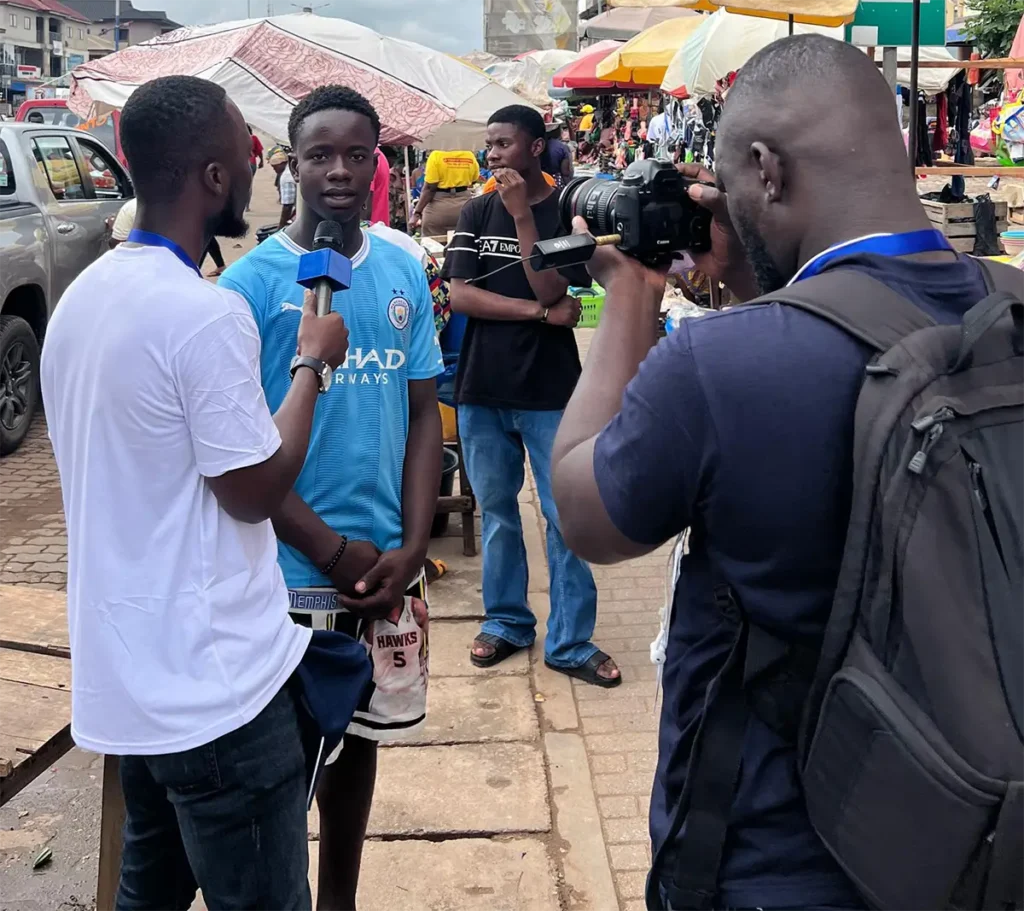
The Youth Barometer created a safe space and platform for young Ghanaians to express their views on accountability, governance, and democracy, and the team successfully gathered the opinions of 250 young people.
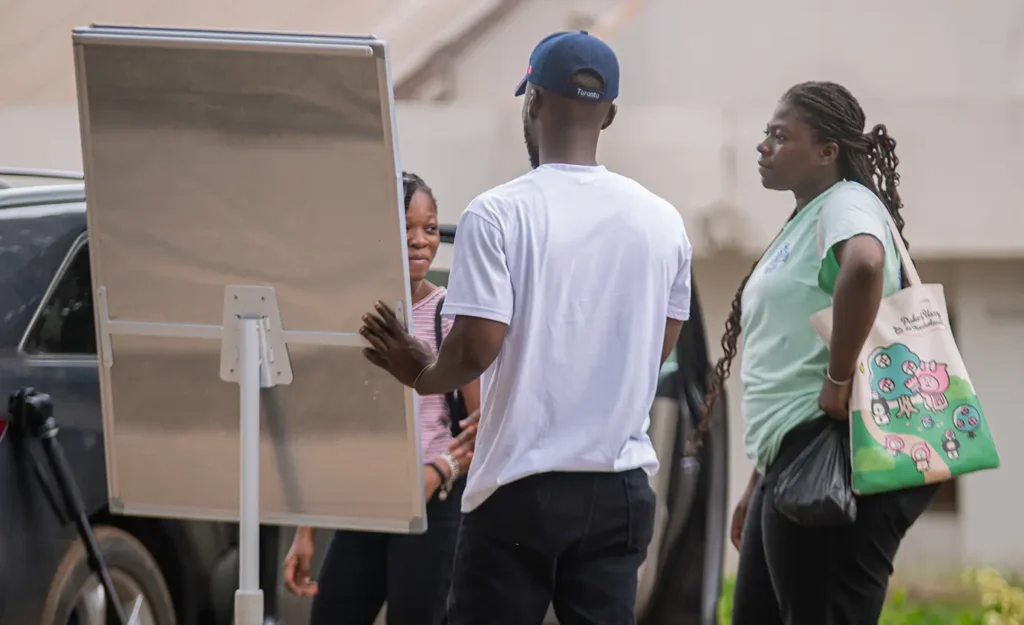
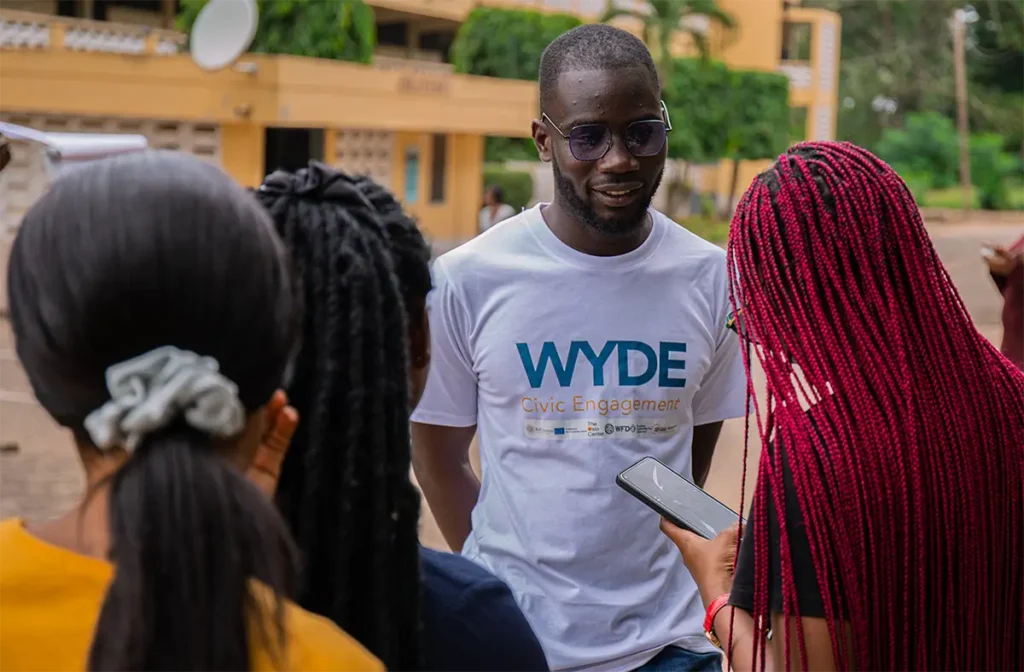
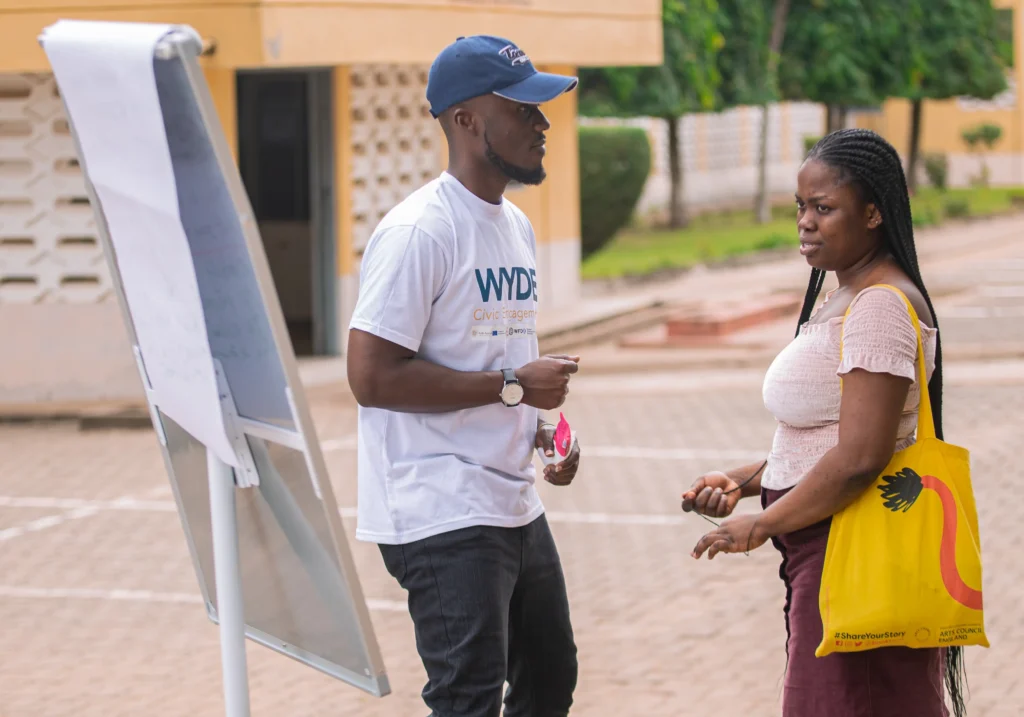
During street engagements, youth could participate in two ways. Those who preferred writing shared their thoughts on large flip charts, creating a visual record of youth concerns. Others, more comfortable with speaking, gave interviews to the camera. This dual approach allowed every participant to contribute authentically and safely, regardless of their preferred mode of expression.
Prince and his team also launched the Barometer Podcast, a unique series in which young people from diverse backgrounds could candidly discuss democracy, governance, and accountability, free from political intimidation and without fear of victimisation.
“This is where I realised that young people really pay attention to what is happening in the country. Some could even recall issues from five or eight years ago for which there has been no accountability.”
When youth speak, democracy listens
The Youth Barometer achieved remarkable success in engaging young people across Ghana, revealing both the depth of youth awareness and their eagerness to participate. Through street engagements, the project captured authentic and unfiltered youth voices, challenging assumptions about youth disengagement.
“The comments and the feedback that we got from the streets on accountability were so mind-blowing. It taught me that we are really paying attention, and the young people do not easily forget what is going on.”
These interactions highlighted a generation that is attentive, informed, and deeply concerned about governance issues affecting their lives.
Beyond public engagement, the Barometer Podcast emerged as a powerful educational tool for both participants and organisers. According to Prince, “It did educate a lot of young people out there, and we also ended up educating ourselves.” This peer-to-peer learning proved especially motivating, as Prince notes: “When someone is in line to speak and hears what others are saying, they learn a lot and get motivated.”
The impact of the Youth Barometer has endured well beyond the project’s formal implementation. Prince continues to receive feedback from young participants eager for its return:
“I still get many calls from young people asking for episode two, episode three, and episode four of the Barometer Podcast, because it has been a long time since we had a vehicle—a system, a safe space—where young people can share their ideas without political intimidation, fear, or the risk of being victimised.”
This sustained demand underscores the scarcity—and importance—of safe civic spaces for youth expression in Ghana.
Ultimately, the project succeeded in fostering a participatory culture among young people by offering flexible and inclusive engagement methods that prioritised safety and openness. These approaches encouraged honest dialogue and mutual learning, helping to normalise youth participation in democratic processes. As Prince affirms, “It brought out the genuine concerns and a lot of young people are learning from each other,” reinforcing the Youth Barometer’s role as a catalyst for youth-led democratic engagement.
Lessons from the streets, vision for the future
The Youth Barometer demonstrates the power of youth-led, youth-centred initiatives. Prince’s key insight for organisations and leaders is clear: “We’ve come of age. We have the ideas. We have the knowledge. We have the empowerment.” He urges organisations to invest in projects developed by young people themselves, recognising that youth understand their peers’ needs and communication preferences.
The project also confirmed the value of street-level engagement.
“There is a lot of content on the streets. There is a lot of information there. The streets are what control things—the streets are what move things”
Challenges remain, particularly around funding and sustainability. Prince and his team are actively seeking partners and writing proposals to continue the work. They are negotiating with a studio to maintain podcast production and planning to return to the streets for more engagement.
“We are not stopping. We live on a continent where pushing such an agenda is challenging and attracting investment is difficult, but when drive, love, and passion are present, everything becomes possible.”
Democracy thrives when young people are heard
Prince’s journey with the Youth Barometer proves that when young people are given the tools, training, and platform to lead, they can create meaningful change in how their generation engages with democracy. By creating a safe space free from intimidation, the project unlocked genuine youth voices that had long been waiting to be heard.
The future is bright for the Youth Barometer. With continued passion, drive, and support, Prince and his generation of young Ghanaians will keep demanding accountability and building the democratic culture their country deserves.