
In Benin, where nearly 60% of the population is under 25, young people remain on the margins of national governance despite their demographic weight. They are often perceived as inexperienced or not yet capable of contributing meaningfully to political decision-making, reinforcing stereotypes that limit their influence.
Youth on the sidelines
Even within youth-focused structures meant to elevate their voices, participation tends to be more symbolic than strategic, revealing a gap between political intentions and the lived reality of young citizens seeking representation.
While the Parliament of Youth provides an institutional space for engagement, it operates with limited policy influence, a passive mandate, and insufficient opportunities for members to transform ideas into action.
Many young parliamentarians lack access to the training, mentoring, and resources needed to navigate political processes or advocate for their priorities. It is precisely in this context, where potential exists, but support is missing, that Estelle Djanato steps in, determined to strengthen the institution from within and help young voices claim the influence they deserve.
The road to leadership: Estelle’s journey

Estelle Djanato’s journey as an activist began during childhood, travelling across Benin with her father doing development work. In villages and neighbourhoods, she watched him listen to people’s concerns and help communities find practical solutions. Those experiences, along with their long conversations about peace, governance, and development, shaped her belief that meaningful change starts close to people.
“Seeing my father serve communities showed me what real impact looks like.”
Even at a young age, she knew she wanted a life rooted in purpose.
Her leadership took form in 2015 when she joined the West African Network of Young Women Leaders (ROAJELF). Guided by her commitment to peace and governance, she helped the network expand its work to include the Women, Peace and Security agenda. She can recall having led more than 20 trainings on peace, security and governance, reaching nearly 400 young people across Benin, and 40 percent were women. “This reminds me that when we create space, leadership rises”, she says.
Many of those participants went on to become peace advocates in their communities. This ripple effect remains one of the achievements she is most proud of.
“When young people are equipped, they create.”
In 2019, Estelle joined the Civic Academy for Africa’s Future (CiAAF) as a researcher, deepening her work on governance, youth participation, and public policy. During the same period, she created a new Peace and Security Department within a national NGO, integrating gender, conflict prevention, and community resilience into its mission. Today, through her work with the Kofi Annan Foundation in Ghana, Estelle continues to champion youth leadership and inclusive governance, carrying forward the mission she first discovered as a young girl travelling beside her father.
A turning point for the project
The WYDE Accountability Hubs programme entered Estelle’s life at a time when she was seeking new ways to deepen her impact. Accountability Hubs became more than a training space. It became a catalyst, a mentor and a bridge toward the kind of change she had always envisioned for young people in Benin. Through the programme, Estelle gained access to tools, approaches, and seed funding, which gave her the confidence to lead her project successfully.
The outcomes Estelle is most grateful for:
- A project management training introduced fresh, innovative methods and gave her a renewed sense of confidence to design and lead ambitious initiatives.
- A public policy training that helped her see the political landscape with new clarity, enabling her to analyse decisions, understand power dynamics and speak with more confidence in governance spaces.
- A vibrant network of young leaders who, like her, are committed to building fairer and more peaceful societies. This network quickly became one of her most valuable resources, opening doors to new collaborations, research, and collective action.
- Most importantly, Accountability Hubs gave her the tools, guidance, and community she needed to bring her vision to life. Today, she continues to engage with the young people she met through the programme, turning shared ideas into partnerships and transforming passion into real change for youth participation and inclusive governance in Benin.
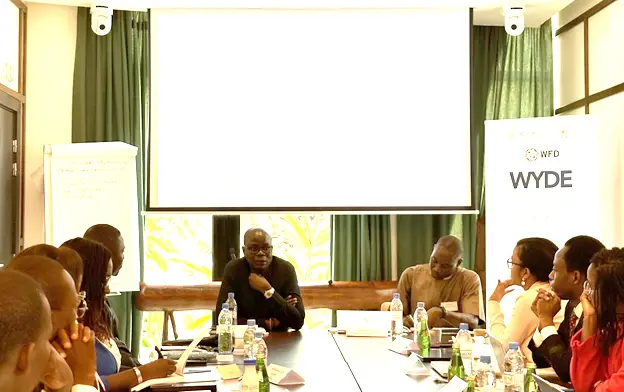
Estelle’s initiative set out to address a clear problem: young parliamentarians in Benin were expected to represent youth interests, yet they lacked the training, confidence and space to influence decisions. Many told her that laws were being passed and important decisions made “right under their noses” without their input. Through Accountability Hubs, Estelle gave them the tools and platforms they needed to be heard.
Sparking change: The impact so far
Training of 24 young parliamentarians from 12 departments: Estelle delivered targeted capacity-building sessions for two young parliamentarians per department, focusing on their roles, advocacy, resource mobilisation, and engaging political actors.
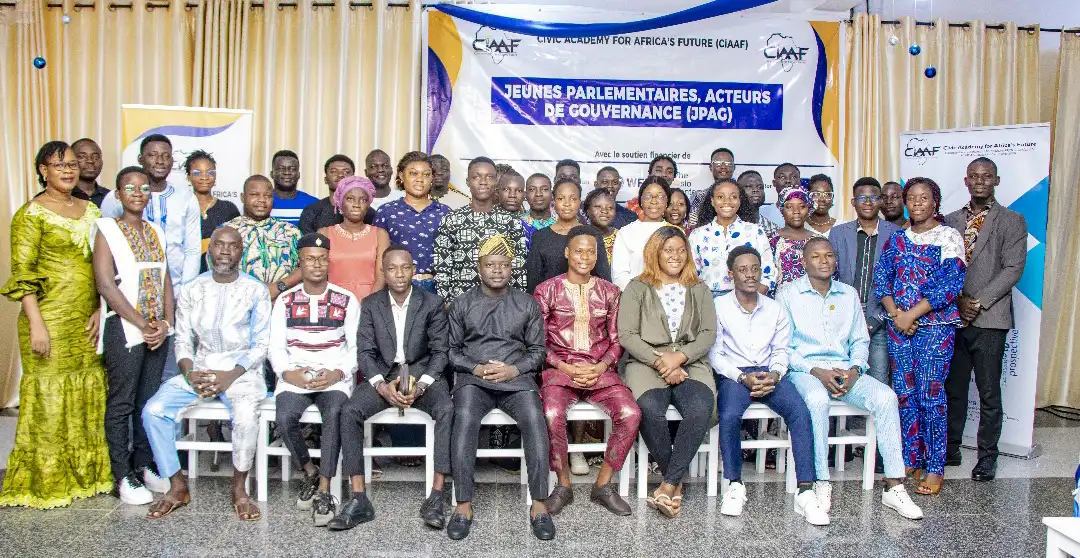
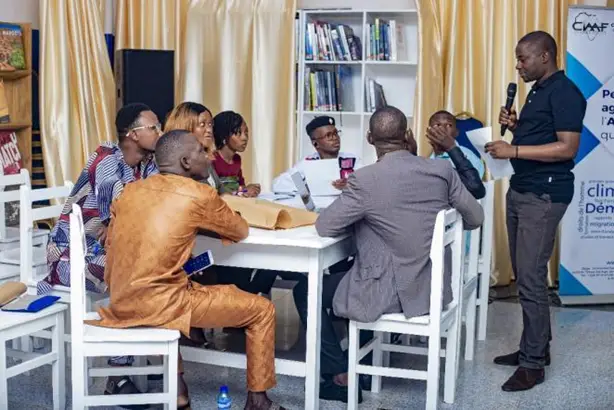
Organising a national reflection workshop with 42 youth leaders: she brought together Youth Parliament members and youth-led organisations to reflect on their role in governance, the challenges they face and the solutions they want to promote.
Co-creating the Youth Governance Manifesto: the workshop produced a first-of-its-kind youth-authored manifesto outlining their priorities, messages and recommendations for more meaningful youth participation in Benin.
Engaging political parties ahead of the 2026 elections: Estelle supported youth delegates in presenting the manifesto to political parties. Two parties engaged constructively and committed to considering youth priorities. The dialogue continues.
Ensuring sustainability through shared leadership: Estelle worked closely with the President of the Youth Parliament to take ownership of the next steps. The manifesto now serves as a permanent advocacy tool guiding their engagement.

The shift the project has made possible
- Young parliamentarians now understand their mandate more clearly and feel more confident engaging in decision-making spaces.
- Youth created the first governance manifesto of its kind in Benin, rooted in their realities instead of political agendas.
- Direct dialogue was initiated between youth leaders and political parties, raising the visibility of youth interests ahead of the 2026 elections.
- A clear roadmap now guides ongoing youth advocacy, ensuring the project’s impact continues beyond its official end.
- A strong network of engaged young leaders has emerged, collaborating on governance and advocacy efforts across the country.
Why it matters
Estelle’s project made something unprecedented possible. For the first time, young people across Benin came together to define what meaningful participation should look like and carried their message directly to political actors. She did not simply train youth. She helped them build a collective voice and the confidence to use it.
“For years, young people felt invisible in governance. Seeing them stand up with confidence and carry their message to decision makers is the impact I am most proud of.”
Insights from the journey, and the path ahead
Through her project, Youth Voices for Inclusive Governance in Benin, Estelle learned that real change begins when young people are trusted with space, skills and guidance. The combination of local engagement, flexible support, and strong mentorship from the WYDE programme allowed young people from across the country to unite around a shared vision for meaningful participation.
One of the biggest challenges came when youth leaders attempted to present their manifesto to the National Assembly. Despite their legitimacy, the doors did not open easily, and the meeting could not be secured. Instead of stepping back, Estelle and the young leaders adapted their strategy. They shifted their advocacy toward political parties, knowing these actors also influence national decisions.
Two political parties received them and expressed willingness to consider youth priorities. Engagement with other parties is still ongoing, and youth leaders are now more confident in approaching them.
Looking ahead, the manifesto remains a powerful tool. Even if access to the National Assembly was challenging, the document will continue to serve as a reference for advocacy at all levels, from local dialogue to parliamentary outreach. The Youth Parliament now has a roadmap for long-term engagement, and the network formed through the project will support young leaders as they continue pushing for their place in governance.
A glimmer of hope
Estelle carries a deep sense of hope from this experience. Young people who once questioned their role now speak with confidence and purpose, grounded in a manifesto they built together. Reflecting on this shift, she shares, “Seeing these young leaders raise their voices with clarity and courage reminded me that change begins the moment youth realise they belong in the conversation.”
“Seeing these young leaders raise their voices with clarity and courage reminded me that change begins the moment youth realize they belong in the conversation. This project made me understand that once youth know their power, they do not step back.”
Estelle’s work shows that even when doors close, young people can forge new paths and continue to find ways to make their voices heard.