In Togo, young people’s disinterest in politics has become entrenched over time. Convinced that power belongs to an immutable elite, many turn away from it.
In this context, Essossiname Tagnami is taking the opposite approach: putting young people back at the heart of governance, not as spectators, but as agents of change. “Young people must stop waiting to be given a voice. They must learn to take it and use it to transform society,” he explains.
From activism to political education
Essossiname’s path to civic engagement was not accidental, but rather the result of long observation of political abuses and a deep sense of urgency.
A lawyer by training, now approaching his forties, he knows from experience how much a lack of political culture can weaken a democracy and deprive young people of their voice.
“Many young people take political positions without understanding the issues at stake. Their ignorance fuels the same mistakes, the same crises, and prevents any sustainable development”.
He joined Amnesty International at a very early age and actively participated in campaigns to abolish the death penalty—a major victory that revealed to him the power of collective advocacy. “With Amnesty International, I understood that you could change the system through conviction and method. That’s where I learned that change rarely comes from above.”
His law studies sharpened his understanding of institutions and the flaws in the political system. During a conference he organized in the run-up to the municipal elections, he was astonished to discover that some candidates were unaware of basic electoral rules.
“If those who aspire to govern do not understand the legal framework, how can we expect credible governance?”
This observation gave rise to the idea of a citizen-led organization dedicated to the political education of young people, to fill the knowledge gap and restore confidence in public action. The ultimate goal is to involve young people in the debate, beyond partisan activism.
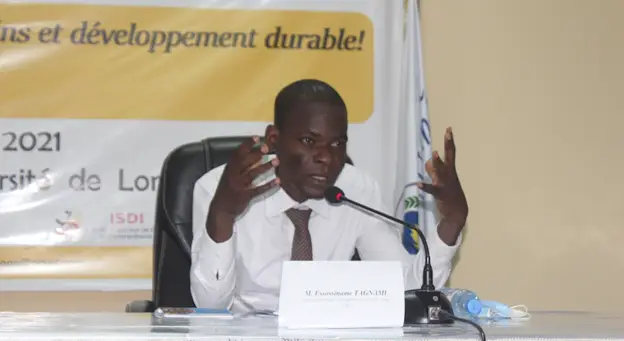
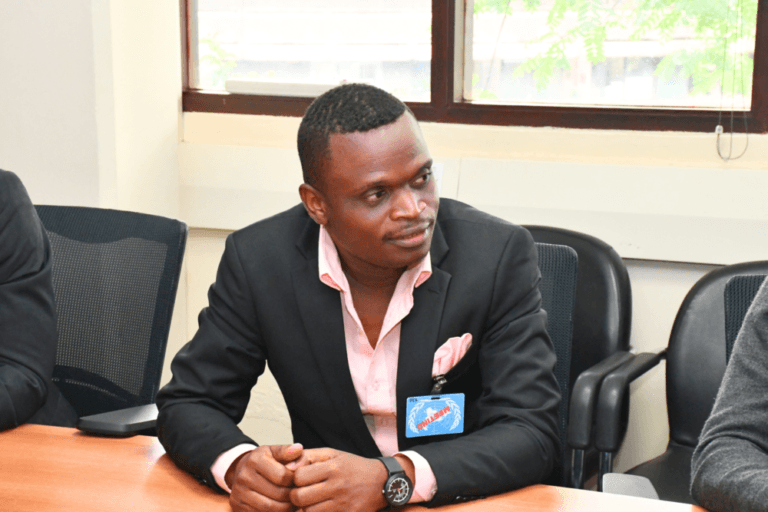
(Photo credit: Essossiname Tagnami / WYDE)
The impetus for a decisive turning point
In 2023, Essossiname seized a unique opportunity to amplify his impact. He was selected to join the WYDE Accountability Hubs programme, which strengthens democratic governance and accountability by supporting young African leaders committed to transparency and citizen participation.
Thanks to this impetus, Essossiname is bringing to fruition a long-standing idea: to create a civic school where young people learn to understand, question, and influence political processes. He is thus launching a unique project in Togo, based on a three-pronged approach:
- Training of 10 influencers—five women and five men—in citizen oversight of public action (CCAP);
- A youth political academy for inclusive governance for 25 young people (including 15 women) from political parties, civil society organizations, and the National Youth Council (CNJ);
- A three-month digital campaign led by the trained influencers to spread messages of inclusive and participatory governance.rnance inclusive et participative.
“Togo on the go,” the youth movement shaking up politics
The involvement of influencers and content creators, these unconventional players, is one of the project’s great successes. By leveraging their notoriety, Essossiname has transformed social media into spaces for civic awareness.
“We wanted to show that it is possible to talk about politics differently, without jargon, without fear, and above all without exclusion”.
The digital campaign, which ran from August 19 to November 19, 2024, broadened the message’s reach beyond the 35 direct beneficiaries. Shared on Facebook, WhatsApp, and TikTok, the content sparked numerous discussions about local governance and the role of young people. Partner citizen pages relayed the messages, creating a snowball effect in several regions.
As for the Political Academy, it offered the 25 participants immersion in leadership, participatory governance, and political ethics, strengthening their ability to move beyond simple activism.
“Many young people are active in political parties, but very few aim for positions of responsibility. We wanted to show them that they can, and must, go further”.
This new learning space quickly became a laboratory for ideas and knowledge sharing, the foundation for a generation of young actors determined to reinvent politics in a different way.
Tangible impacts and sustainable prospects
The effects of the project were quickly felt. At the end of the training sessions, several young people reported a profound change in their perception of governance and their role as citizens.
“Before, I thought politics was for ‘other people’. Now I know that my voice counts and that I can influence decisions,” said one participant in the Political Academy.
Some, particularly members of the National Youth Council (CNJ), say they have changed the way they engage with local authorities. Others have joined local budget monitoring committees and launched their own advocacy initiatives.
The trained influencers continue to share educational content online, extending the momentum well beyond the end of the program.
Yesterday’s limitations and tomorrow’s ambitions
However, with a limited budget, the team had to be resourceful in order to optimize resources and reach as many young people as possible. Essossiname acknowledges that one of the major challenges was geographical reach:
“We would have liked to go beyond Lomé, to more rural areas, where young people are often left out of the political debate.”
He intends to build on this lesson in the future by strengthening partnerships with community media and local organizations in order to adopt a more decentralized and inclusive approach.
Buoyed by this initial success, he is already planning the next steps with the ambition of institutionalizing the Political Academy and making it a permanent civic training space for Togolese youth.
“Youth is not a problem to be managed; it is a solution to be listened to. If we want to reinvent politics, that’s where we need to start”.