
In communities across Western Rural Sierra Leone, a familiar story has played out for generations. Young people, passionate, articulate, and deeply invested in their futures, grow up seeing local government as something that happens to them, not something they can shape. Governance institutions feel distant or unresponsive. The language of accountability and civic rights belongs to someone else, somewhere else. And without a structured space to learn otherwise, that perception hardens into disengagement.
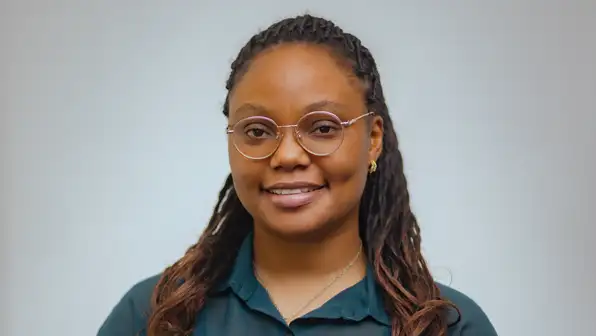
Musa Carew, Founder and Team Lead of Peace Drive, decided to change that story, one workshop at a time.
The gap between potential and opportunity
Musa has spent years working in peacebuilding across Sierra Leone, and in that time a pattern kept repeating itself.
“Through my peacebuilding work, I kept meeting youth who were passionate, articulate, and deeply invested in their communities, but who had never been given a structured space to understand how governance systems worked or how they could influence them.”
His own experiences in international policy spaces, from UN forums to global youth networks, showed him what becomes possible when young people are informed and supported. The question he kept returning to was a simple one: why not create this experience locally, for young people in communities that are rarely at the centre of these conversations?
That conviction became the Knowledge Management Series: Empowering Youth for Accountability and Leadership.
A Framework for rigorous thinking
The WYDE Accountability Hubs programme provided more than financial support.
“The WYDE programme gave us more than funding. It gave us a framework for thinking rigorously about youth-led accountability.”
The emphasis on locally-driven solutions was particularly valuable, validating Peace Drive’s approach of designing the programme around the specific realities of communities in Western Rural Sierra Leone rather than importing a generic civic education model. Support from the broader WYDE network also helped sharpen the project’s design and monitoring processes, making the programme structured, measurable, and replicable.
Learning that connects to lived reality
The Knowledge Management Series is a youth-led civic education initiative delivered through interactive workshops in Waterloo, Goderich, and Freetown. Participants explore civic rights, accountability mechanisms, and the functioning of local government institutions — but not through lectures or abstract theory.
Musa was deliberate about this.
“Knowledge becomes transformative only when young people can connect it to their lived realities.”
So the programme is built around discussions, case studies, and peer learning. Participants work through real governance scenarios, examine how local institutions actually function, and explore what accountability looks like in practice — including the roles of councillors, the rights of citizens, and how communities can engage constructively with decision-makers.
The approach reflects a core conviction: young people are not future leaders waiting in the wings. They are active contributors to democratic governance right now.

“They had a legitimate role”
The feedback from participants has been among the most revealing indicators of the programme’s impact.
Several participants told Musa that they had never been taught that they had a legitimate role in holding leaders accountable. That realisation — simple in principle, but profound in practice — captures something the programme was specifically designed to surface.
The most visible change, Musa observes, has been in confidence.
“Many participants arrived cautious about discussing governance or expressing opinions on civic matters. By the end of the programme, those same young people were asking sharp questions, debating ideas with their peers, and speaking with a clarity that surprised even them.”
But the deeper shift was in identity. Participants stopped describing themselves as bystanders to governance and began framing themselves as stakeholders. “That shift — from observer to participant — is exactly the kind of change this programme was designed to create,” Musa says.

Knowledge that travels
One of the most encouraging outcomes has been what happens after the workshops end.
Several participants have taken what they learned back into their own communities, facilitating informal discussions in youth groups, raising awareness about civic rights, and encouraging peers to get involved in local decision-making spaces. The programme has also built networks between young people across Waterloo, Goderich, and Freetown who now share a common language around democratic participation — a cross-community connection with value well beyond any single training session.
“When young people genuinely own the learning, they start doing it naturally.”
Building the foundation for what comes next
Musa is clear-eyed about where the work needs to go. The immediate priority is expanding reach — bringing the programme to more communities where young people currently have little access to civic education or leadership development. Alongside that, Peace Drive is working to deepen partnerships with civil society organisations, educational institutions, and governance stakeholders to create sustained pathways for youth civic engagement, rather than one-off events.
The longer vision is more ambitious still: a network of connected, informed young leaders across Sierra Leone who are actively contributing to accountability and democratic participation in their communities.
“I hope it contributes to a genuine culture shift, away from civic apathy and toward active, informed participation in democratic governance in Sierra Leone. Not through top-down reform, but through generations of young people who understand their power and choose to use it responsibly.”
The young people who have already been through the programme suggest that shift is already underway.