For years, Mombasa County in Kenya has struggled with the consequences of weak public financial oversight, including stalled infrastructure projects, misallocated funds, and a persistent gap between what communities need and what policymakers prioritise. Despite a legal framework that includes the Public Finance Management Act and county provisions for public participation, meaningful citizen engagement has remained largely out of reach, particularly for young people.
Youth participation in budget and policy processes has long been tokenistic at best, offering little real opportunity for Mombasa’s young citizens to shape decisions that directly affect their lives. Meanwhile, the organisations and individuals working to hold government to account — civil society groups, journalists, community leaders — have often been doing so in isolation. This has limited their collective impact and left activists vulnerable to targeting and reprisal.
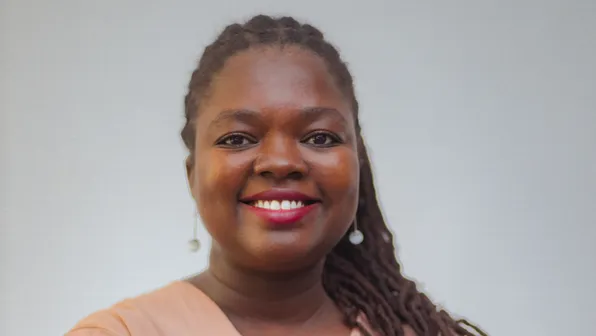
Something needed to change. And for Anne Rose Osamba, that change could not come soon enough.
A young leader who refused to work alone
Anne Rose is not new to this fight. With eight years of governance and policy advocacy experience behind her, she has navigated the complexities of fiscal budgeting, contributed to Open Government Partnership (OGP) processes, and seen firsthand how exposed individual whistleblowers can become.
“When you’re the whistleblower, you can be targeted, so I was looking at something collaborative. How do we use the spirit of open governance to make sure that you’re collaborating instead of being adversarial?”
That question became the foundation for Kiongozi Muadilifu — Swahili for ‘Principled Leader’ — a political incubation lab Anne Rose founded three years ago. Now in its fourth cohort, the project has evolved into something genuinely distinctive: a structured, cross-sector fellowship that brings together young people from the Senate Oversight Grassroots Committee, civil society organisations, community influencers, and journalists — not to confront government, but to work alongside it in demanding accountability.
“If these young people are able to report the violations, or report some of the gaps within social accountability in their communities, they don’t have to do it alone. They send it to the senator, and then the senator can send it to the Senate. So it means they are cushioned.”
WYDE Accountability Hubs: A mentor for changemakers
Anne Rose’s vision found a powerful partner in the Accountability Hubs programme. Beyond funding, the initiative provided a framework and community of practice that helped sharpen Kiongozi Muadilifu’s approach.
Particularly influential was the programme’s emphasis on post-legislative scrutiny (PLS) — equipping young people with the tools to review whether policies are actually delivering on their promises — and on what Anne Rose describes as “humanising the project.” Rather than imposing externally designed logical frameworks, the Accountability Hubs approach encouraged communities to define change on their own terms.
Building a coalition, not just a cohort
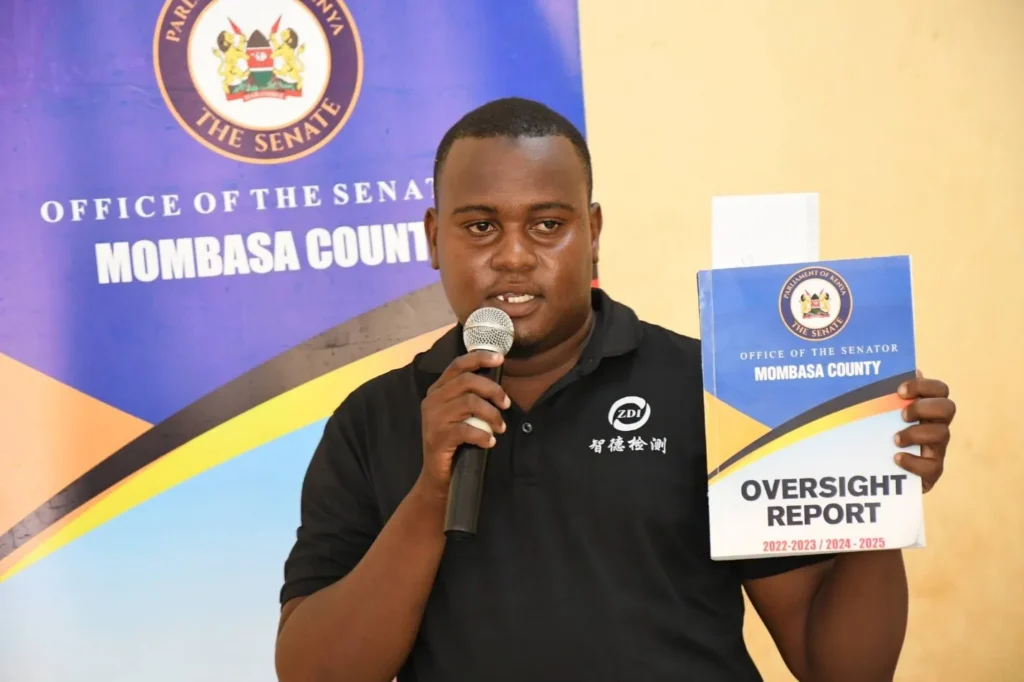
Cohort four of Kiongozi Muadilifu formally launched with a buy-in meeting attended by Mombasa County Senator Mohammed Fakii, Kilifi Senator Stewart Madzayo, representatives from the State Department of Youth, senior county government officials, civil society leaders, and members of the fourth estate. It was a visible signal that this initiative had genuine institutional backing.
The cohort itself brought together 55 participants: 25 young members of the Senate Oversight Grassroots Committee, 10 community champions forming local ‘accountability cells’, 10 journalists, and 10 youth from civil society organisations.
Capacity-building sessions covered civilian oversight, social accountability tools, the county budget process, and public participation frameworks.
What set this cohort apart was not just the training, but the collaboration it enabled. Fellows, journalists, and civil society actors began sharing a joint calendar of activities and a WhatsApp coordination group, dividing themselves across public participation meetings to ensure inclusive representation. The Senator’s office, which already has a formal oversight mandate, became an anchor for the group’s work—giving young people a legitimate and protected pathway into the accountability ecosystem.
“We realised they’re all doing the same work, but people are working in silos, so the project was very non-adversarial in nature — the key strength here is collaboration.”

Real change, measured in real lives
The results have been tangible. The Senate Grassroots Oversight Committee successfully tracked public expenditure and produced a social accountability report whose findings will be presented in parliament.
In one of the cohort’s most concrete achievements, fellows followed up on the underspending of allocated funds at Kongowea Dispensary — a facility serving one of Mombasa’s most underserved communities. Through sustained advocacy, they influenced the reallocation and proper utilisation of those funds. Today, the dispensary is functional and equipped with basic medical supplies.
Fellows also participated in the budget-making cycle for the 2025–2026 financial year, directly shaping youth priorities in county budget submissions.
Beyond policy wins, the transformation in the young people themselves has been equally striking.
“I’ve seen them translating policy language into local languages that their communities can understand, and then taking the priorities back to the Senate and writing them in English.”
Fellows have become bridges between government and the communities they serve — speaking the language of both.
Lessons forged in the field
The experience reinforced a key lesson about framing.
“In advocacy work, especially policy and budget collaboration, collaboration is very key. “The way we frame our issues for action also becomes very important, because then you’re not fighting people but reminding them: hey, this is your role.”
She also points to the value of joint indicators, shared calendars, and simplified communications as tools that could usefully inform OGP reporting frameworks — making accountability processes accessible to the communities they are meant to serve.
A generation ready to lead — today

For Anne Rose, the deepest reward lies in watching young people step fully into their power.
“I feel so motivated when I meet with the fellows and I realise they’re young people like me. It’s really critical that organisations invest not just in the ideas, but allow young people to co-create the ideas themselves — not being forced.”
She is clear on one point: these are not tomorrow’s leaders. “They are the leaders of today.”
Looking ahead, the cohort will graduate with each fellow having completed a full post-legislative scrutiny audit of a specific policy. The Senator has committed to taking the entire cohort to the Senate in Nairobi. And Anne Rose has her sights on the OGP arena, where she hopes the lessons of Kiongozi Muadilifu — particularly on meaningful youth inclusion in social accountability — can inform practice at a national and international level.
In Mombasa, the conversation about public money and public power is no longer something young people watch from the outside. They are in the room. They are at the table. And they are changing what accountability looks like.