In Côte d’Ivoire, young people in rural areas, particularly in the department of Alépé, have limited opportunities to participate in local governance and shape decisions that affect their communities. Despite playing important roles within village life, many lack the skills, platforms, and support needed to effectively express their needs and contribute to local development.
Combined with economic insecurity and weak youth structures, these challenges often increase their dependence on traditional leaders and political actors, leaving many rural youth voices unheard.
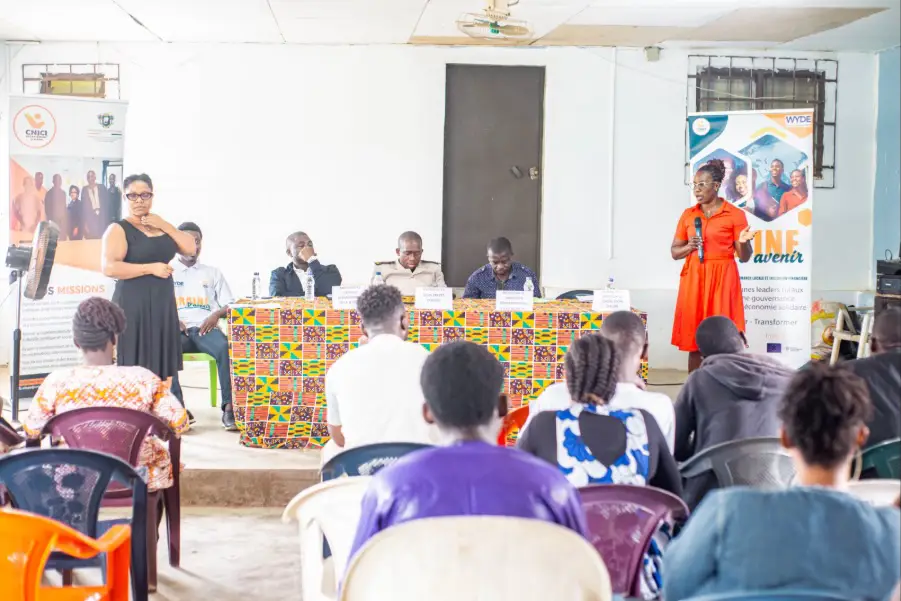
Photo credit: Anselme Akossi
A journey from local to national youth leadership
Coming from Abobo, a working-class district of Côte d’Ivoire, Akossi Anselme’s commitment to civic engagement began early through local student and youth associations in his village.
Over time, his interest in politics and governance grew, driven by a desire to help young people become more active contributors to their communities. Following Côte d’Ivoire’s post-electoral crisis, he joined Amnesty International Côte d’Ivoire, where he later became National Youth Coordinator and led initiatives promoting human rights and youth engagement.
One of his proudest achievements was helping establish the Youth Working Group during the 2016 constitutional reform process, bringing together youth from civil society organisations and political backgrounds to speak with one voice. Through Amnesty and later the National Youth Council, he also mentored emerging leaders who later took on leadership roles in youth and civic institutions.
From a vision to hundreds of voices
For Anselme, the WYDE Accountability Hubs programme marked an important turning point in his journey. The programme expanded his understanding of governance and introduced him to new perspectives on accountability, reporting mechanisms, financial governance, integrity, and gender responsive budgeting.
The programme also equipped him with practical tools to design projects, consider sustainability, and link governance principles to community realities. Through mentorship and financial support, he transformed his vision into action and brought his rural youth initiative to life.
Taking action on the ground
Through his project, ‘Empowering and Strengthening Rural Youth Leaders: Enhancing Governance and Economic Inclusion,’ Anselme set out to equip young people in rural communities with the skills and tools needed to become stronger actors in local development.
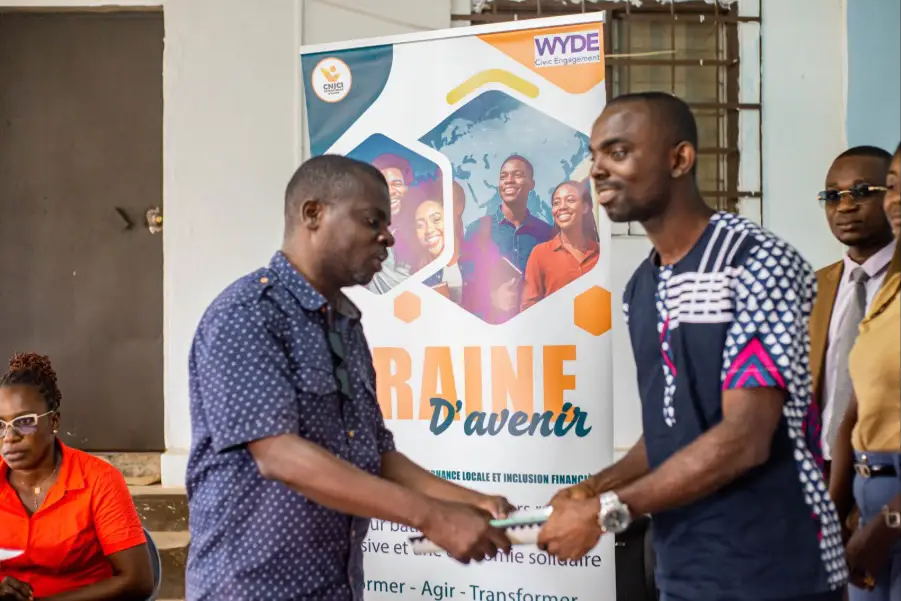
Out of 25 applicants, 15 young rural leaders, including 9 men and 6 women, were selected from villages across Alépé. Participants received training on transformational leadership, participatory local governance, financial inclusion, and community engagement.
Beyond training, Anselme supported the creation of 15 Youth Village Savings and Credit Associations, bringing together 243 young people and creating spaces where youth discuss leadership, participation, and their role in community development.

Photo credit: Ansleme Akossi
Project impact
The project created impact beyond the initial training sessions. By creating 15 Youth Village Savings and Credit Associations, the initiative reached 243 young people across different villages, creating spaces for collaboration, learning, and action. The project also generated strong support from village chiefs, local authorities, youth structures, and the Departmental Youth Directorate.
Beyond the numbers, the initiative strengthened young people’s confidence and visibility, encouraging them to take a more active role in local development. As Anselme says:
“Young people have real potential to contribute to local development. They just need support.”
Lessons from the villages
For Anselme, one of the biggest lessons was that young people don’t just need training; they also need practical tools they can use immediately. The youth groups helped transform learning into action and created stronger ownership among participants. Despite funding limitations, he continued supporting the initiative and introduced Kobo Toolbox to help monitor progress. Looking ahead, he hopes to expand the model to more villages and help more young people become leaders in their communities.

For Anselme, this experience reinforced a belief he has carried for years: young people in rural communities already have the energy, ideas, and commitment needed to drive change. Today, he sees more than a successful project; he sees the start of a stronger generation of rural leaders ready to shape their communities’ future and contribute to the development of Côte d’Ivoire.
His journey also reflects the broader vision of the Accountability Hubs programme, which supports young leaders in transforming local ideas into community-driven solutions and strengthening youth participation across Africa.