
In Mali, more than half of young people have either never attended school or left education early, limiting their access to opportunities for civic participation, training, and public debate.
In a context marked by economic crisis, misinformation, and limited access to civic education, these young people remain particularly vulnerable to political manipulation and civic exclusion.
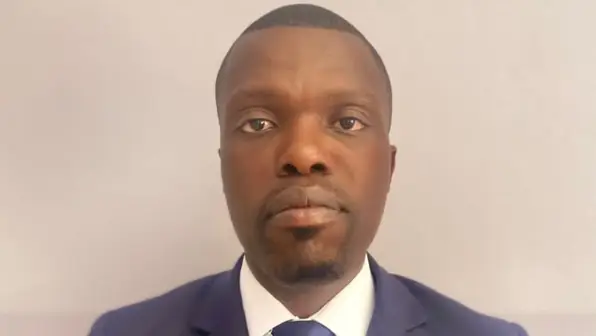
The “Route Citoyenne” initiative led by Zan Dit Issa Diarra seeks to confront this reality by speaking directly to a group rarely placed at the centre of democratic participation programs: out-of-school and non-schooled youth from the six communes of Bamako. The initiative is built around a simple belief promoted by Zan:
“One may not have had the chance to go to school and still contribute to the development of their nation.”
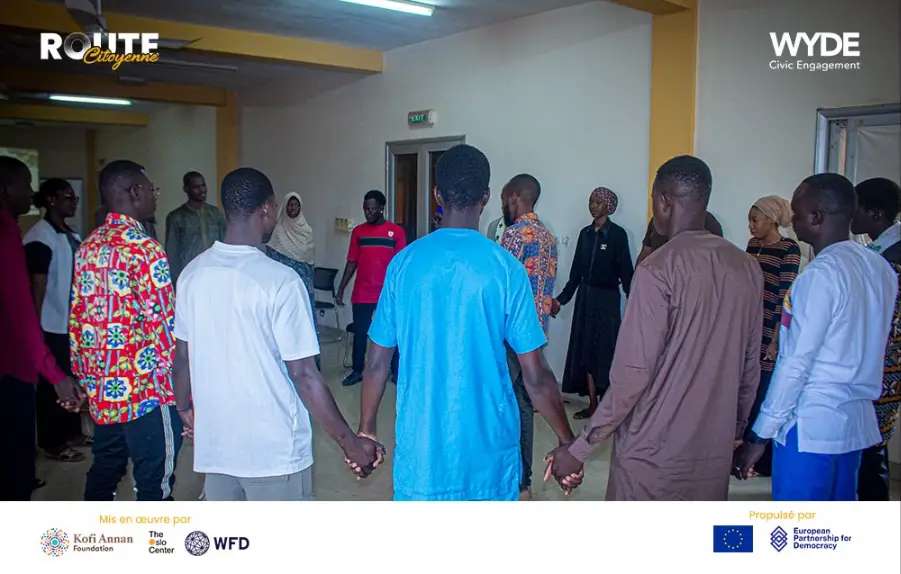
Photo credit: Zan Dit Issa Diarra
From apolitical to active citizen: Zan’s journey
Zan Dit Issa Diarra’s story begins with a paradox: between 2016 and 2017, he described himself as “apolitical” on social media. Everything changed when a friend took him to the congress of a political party founded by one of their university professors. That friend later became president of the party’s national youth office, while Zan unexpectedly found himself serving as the party’s youth secretary general.
This experience became a turning point. As he discovered the realities of political engagement, Zan became aware of the challenges facing his country and decided to “play his part in building the nation.” That commitment still drives him today. Without realising it at the time, that encounter would completely reshape his convictions and priorities, gradually placing him on a path of long-term civic engagement.
At the same time, Zan built his professional life “through practice” in graphic design and video editing, skills he also teaches at universities. He was already active within the Mouvement Social pour le Renouveau, where he trained young people on civic engagement and shared with his political party the lessons he learned from the NIMD-Mali Political and Democratic School, which he joined in 2022.
In early 2023, he joined the Groupe de Réflexion et d’Action pour la Démocratie et l’Innovation (GRADI) and was elected president in August 2024. Through GRADI, he facilitated community discussions on elections, women’s roles, vote-buying, environmental issues, and hygiene. He organised political cafés, webinars on youth engagement, and contributed to an advocacy effort that led to the removal of a garbage dump that had accumulated for more than ten years in a public school.
Accountability Hubs: Turning an idea into action
For Zan, WYDE Accountability Hubs was “a major boost.” The programme helped him strengthen his skills in project management, leadership, civic engagement, and accountability, while also providing him with concrete tools to better plan, implement, and monitor activities.
The project also had a very practical impact: it enabled the funding and implementation of the first full phase of Route Citoyenne, including training sessions, four community activities, audiovisual documentation, and a closing panel discussion.
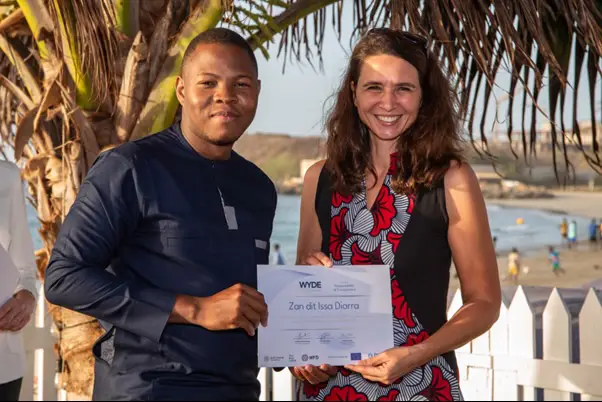
Photo credit: Kofi Annan Foundation
Bringing civic education to young people in Bamako
The Route Citoyenne initiative was officially launched on July 7, 2025, with the creation of Facebook, LinkedIn, and TikTok pages, followed by a call for applications shared through posters and videos in Bambara. This strategy was intentionally designed to make the project accessible to non-schooled and out-of-school youth, who are often excluded from traditional calls for participation written only in French.
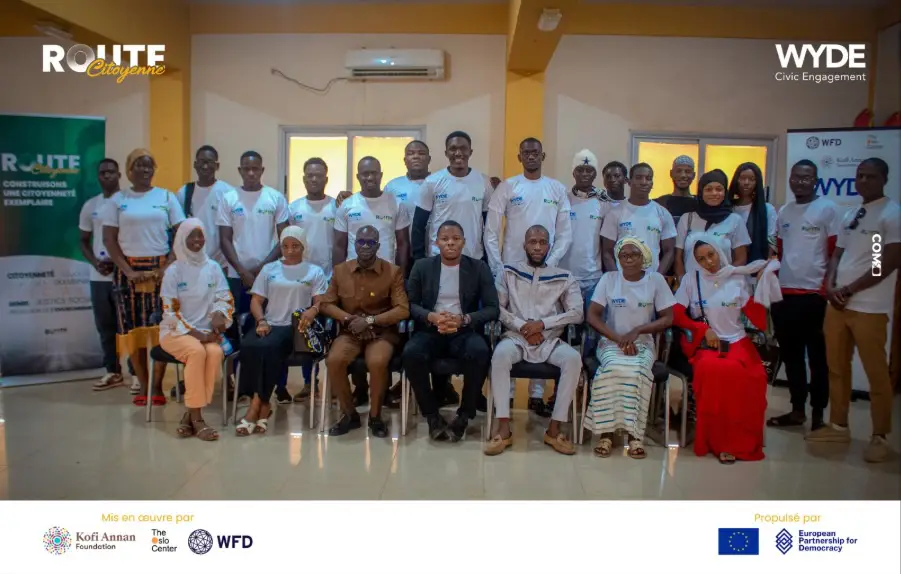
Photo credit: Zan Dit Issa Diarra
In total, 30 young people aged 18 to 35 were selected, including 11 women and 19 men from the six communes of Bamako. Zan also created a WhatsApp group to keep participants engaged. 20 participants completed the training; others withdrew because of transport costs, availability constraints or expectations of financial support for attending. The experience highlighted the practical barriers that can affect participation in community initiatives
The training took place over four days at the Maison de la Femme in Sabalibougou neighbourhood. Six modules were delivered: citizenship, change leadership, transformational leadership, the state and institutions, local governance, and project management. Sessions combined group discussions, practical exercises, and facilitation in local languages to ensure understanding and encourage participation from young people who are rarely included in this type of initiative.
From learning to action: Young people driving community change
Zan’s approach did not stop at transferring knowledge. He wanted the young participants to move quickly into action. At the end of the training, the 20 participants were divided into groups and designed four community micro-projects implemented in Communes II, III, V, and VI, directly reaching more than 300 people.
The first project, “Dji Ni Kènèya,” enabled young people to engage local authorities around an essential need: access to drinking water in the Sirakoro Dounfing neighbourhood, a remote neighbourhood in Bamako.
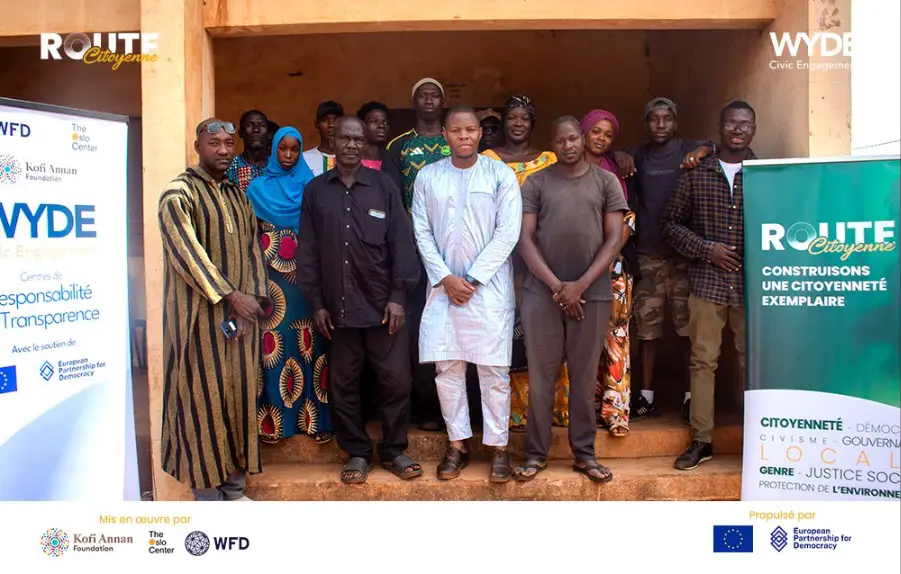
The second project, “Niongon Daimai,” responded to fuel shortages by guiding residents toward available gas stations and distributing water and food to people waiting in line for hours, sometimes days, for fuel.
The third micro-project took the form of an awareness-raising discussion on the harmful effects of drugs in a community where substance abuse has become a serious challenge for young people.
The fourth project, “Sirakoro Propre,” mobilised youth and women to clean a community health centre, including consultation rooms, maternity wards, and the courtyard, to improve hygiene and well-being for users.
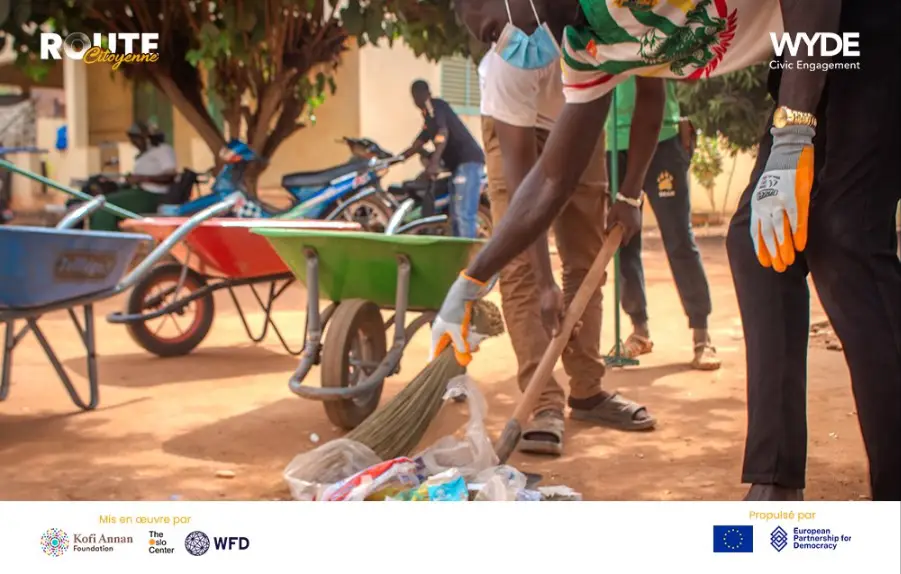
Beyond the activities themselves, change also showed in people’s behaviour. Zan explains that the trained youth now know how to mobilise others, see themselves as political actors, informed voters, and responsible citizens. One testimony particularly struck him: a participant explained that after throwing a plastic water sachet onto the ground, he remembered the training, went back to pick it up, and threw it into a trash bin. For Zan, this small act showed that civic engagement was no longer an abstract concept, but a daily practice.
Route Citoyenne’s strength lies first in its deliberate focus on a group many programs do not consider a priority, despite representing a large portion of the population. For Zan, it is impossible to seriously discuss democracy while ignoring this overwhelming segment of society.
“We must give them the tools to understand, participate, and act.”
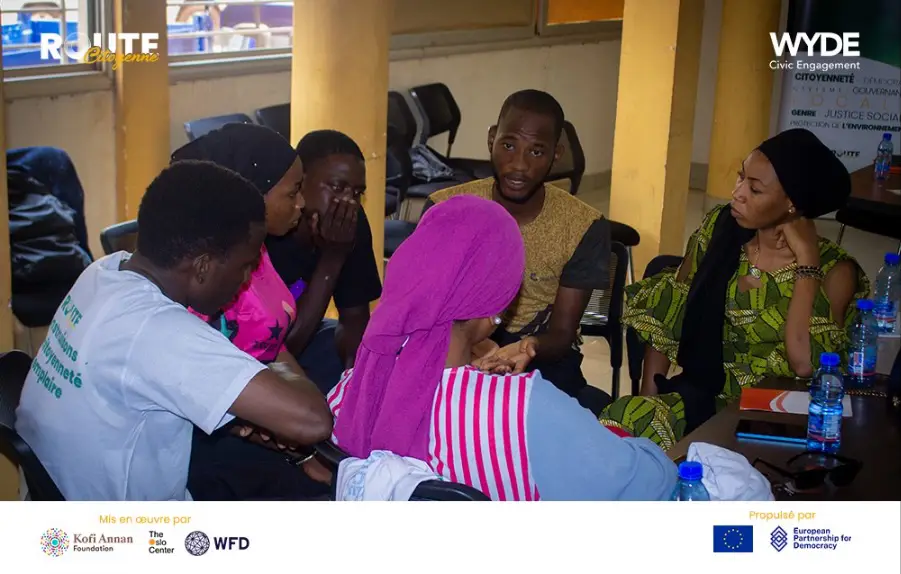
Photo credit: Zan Dit Issa Diarra
Another key element is methodology. By using local languages, accessible videos, direct exchanges, and a teaching approach rooted in everyday realities, the project made civic education practical and understandable. This simplicity turned training into lived experience and, eventually, into community action.
Lessons learned and looking ahead
This experience confirmed for Zan that effective civic education must be adapted to participants’ profiles, especially when working with non-schooled and out-of-school youth. It also showed that regular follow-up is essential, particularly in contexts where the absence of financial incentives can weaken participants’ motivation.

Photo credit: Zan Dit Issa Diarra
Despite these challenges, Zan remains deeply optimistic. What gives him hope, he says, is:
“Seeing that all is not lost and that the country is full of young people committed to democracy and ready to contribute to the development of their nation in their own way.”
He hopes to continue Route Citoyenne, move forward with the current group, encourage youth to launch their own civic initiatives, and sustainably build on the momentum created. As part of this vision, the initiative has already begun the process of becoming a formally registered association. Zan plans to continue the activities while awaiting official registration papers.
“Today, I realize that these young people we once thought were far removed from politics are now debating, taking action, and becoming examples in their neighborhoods.”
Zan’s story shows that strong civic engagement can emerge where it is least expected: first from a young man who once described himself as apolitical, and later from participants left behind by the school system. Through Route Citoyenne, these young people showed they can understand public issues, engage with local authorities, lead useful projects, and become agents of change in their communities.

Photo credit: Zan Dit Issa Diarra