


The Electoral Vulnerability Index is a tool designed to help focus the attention of international and regional organisations, civil society, the media, and others on electoral processes that may be particularly vulnerable to violence.
In 2024, half the world’s population had the opportunity to vote, many for the first time. While it was in many ways a celebration of democratic freedoms, many of the elections came with some form of violence.
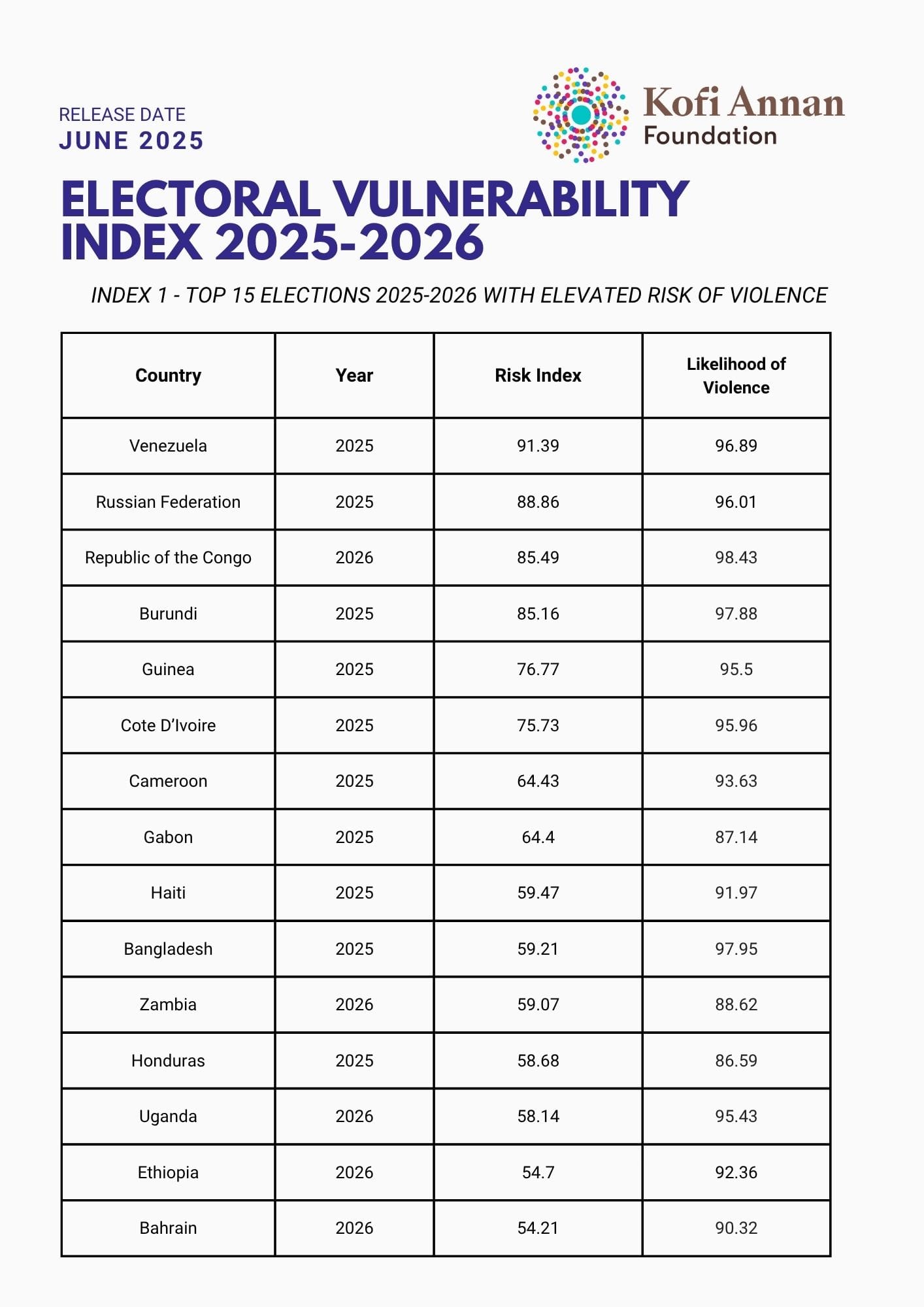
The data on this page reflect the 2025-2026 Electoral Vulnerability Index findings, showing the risk of violence and probability of violence in countries holding elections.
Index 1: Overall Vulnerability to Violence
Electoral Vulnerability Index 1 (EVI 1) uses a weighted ensemble of models to identify the overall vulnerability to violence. Find out more about the ensemble model in the 2025 EVI Technical Report or the working paper introducing the forecasting system.
The Maps and lists below reflect the Index findings, showing the risk of violence and probability of violence in countries holding elections over the next 18 months.
15 countries most at risk of electoral violence in 2025-2026
Index 2: Identifying Digital Vulnerabilities
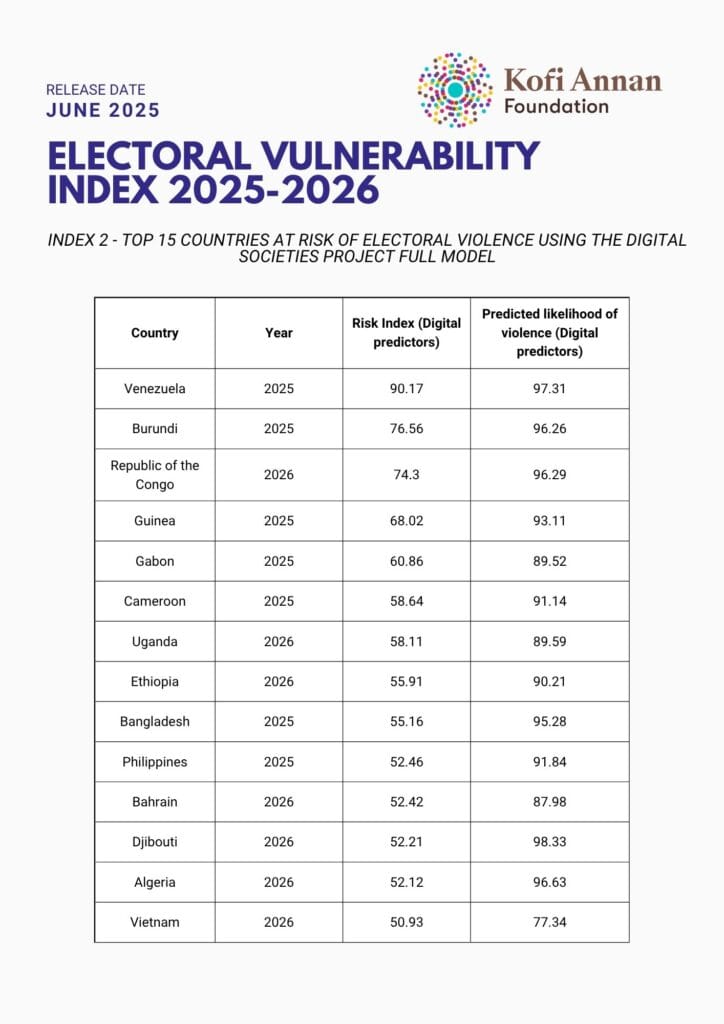
Electoral Vulnerability Index 2 (EVI 2) utilises the Digital Societies Project Model to assess how social media and digital tools may contribute to electoral violence.
The EVI 2 allows us to identify the elections where increased attention is needed to mitigate the harmful impact of social media and digital tools; comparing it against the first table allows us to see where this impact may be significant enough to push elections into violence. The methodology is available in the 2025 EVI Technical Report.
15 countries most at risk of electoral violence in 2025-2026
Top 15 Elections in 2025-2026 with an elevated risk of violence using the Digital Societies Model
Country Analyses 2025-2026
The following is a selection of Country Analyses that provide additional information on the factors driving the risk of violence in a select number of countries and what can be done.