


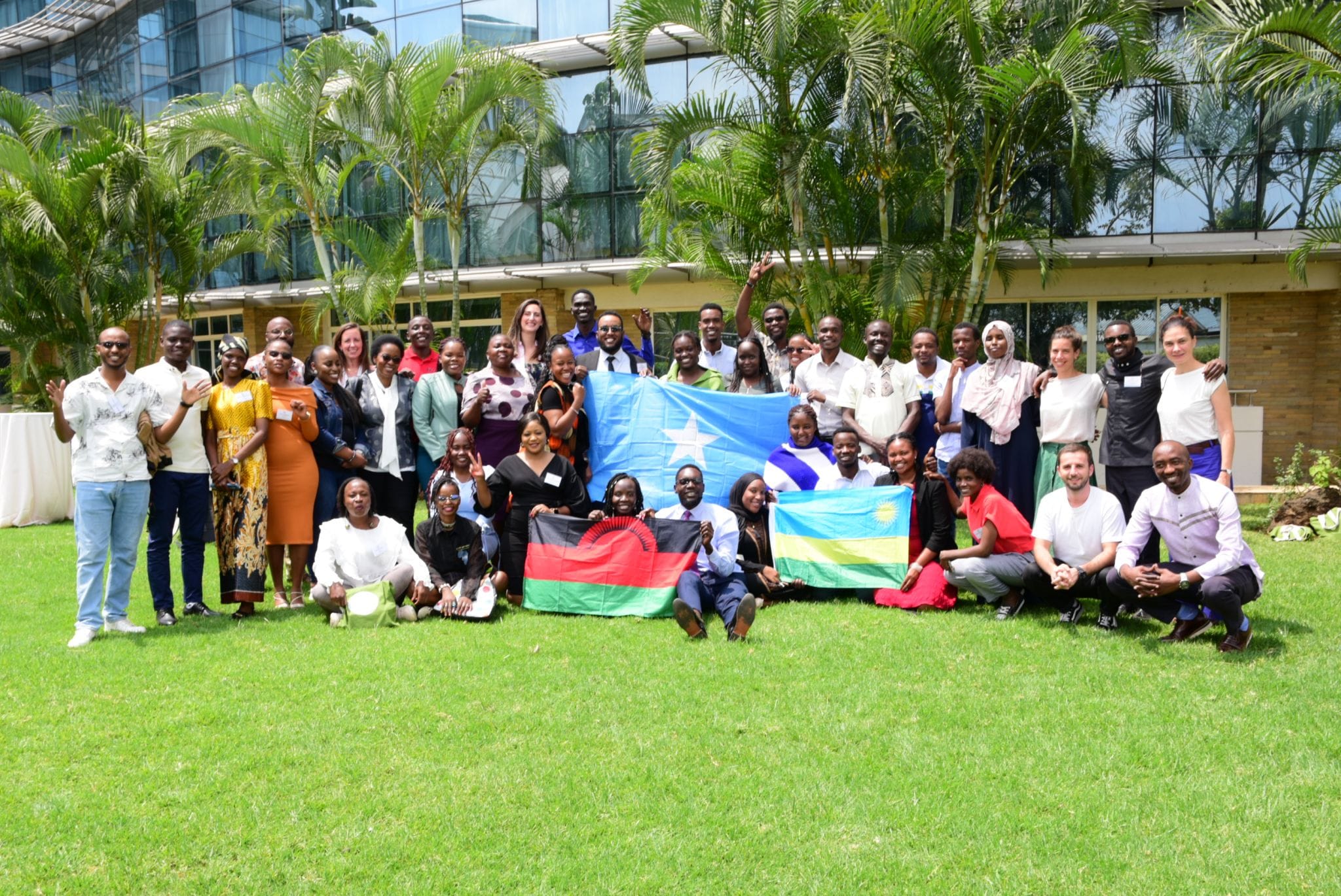
The Sawa Project supports young leaders who are working to improve mental health outcomes across Eastern Africa. Following the Sawa Young Leaders Conference, ten youth-led projects have been selected to receive seed grants.
These ten initiatives, based in Kenya, Malawi, Rwanda, Somalia, Tanzania, Uganda and Sudan, focus on expanding access to mental health services, raising awareness, and reducing stigma. With seed funding, mentorship, and advocacy support, these grantees are developing practical, community-driven solutions to address local and regional mental health needs.
Each project receives mentor support throughout the seed grant period, from January to May 2026. Mentors are selected from the networks of the project partners, the Kofi Annan Foundation, MCW Global, and the Africa Alliance of YMCAs. They all bring mental health expertise and project management experience, which are essential for the successful implementation and sustainability of the projects.
The Seed Grant Projects
Wellness Tent
Intergenerational wellness through traditional games and play in Tanzania
Lead: Emmanuel Samwel (Tanzania)
The Wellness Tent is a mental health initiative designed to bring together older and younger generations within Primetel’s holistic community framework in Monduli, Tanzania. Currently, Primetel provides counselling, school clubs and community engagement regarding mental health and basic care. This project expands upon Primetel’s work by creating a mobile “wellness tent” where young people and older adults will engage in traditional games like bao, rede and kete to build rapport, then naturally transition into conversations about emotions, stress and help-seeking.
Once the games conclude, trained Community Health Workers and Counsellors will provide safe, stigma-free environments for kuzungumza kwa uwazi, teach brief coping skills, and support participants by connecting them to priority care at Primetel, if needed. The Wellness Tent employs familiar michezo ya jadi games and transforms them into structured healing moments to normalise discourse around mental health, strengthen social networks of support, and ensure that youth in the locality and wazee know where to find timely and compassionate care in close proximity to their homes.
Rafikey Pilot II: Healing & Growth for Children aged 2-9
Supporting high-risk groups through play, evidence-based interventions and conversation in Tanzania
Lead: Jawadi Masudi (Tanzania)
Rafikey Pilot II: Healing & Growth for Children aged 2–9 is a project under Rafikey Co Ltd, Africa’s first trauma-informed EdTech and HealthTech platform supporting children aged 2–13 through play, conversation, and evidence-based interventions. The pilot targets high-risk groups, including orphans, street-connected youth, neurodivergent learners, and children from vulnerable households.
Building on a successful first pilot, where 55 locally made Mama+Me and Rafiki+Me kits were deployed across 10+ institutions with 88% engagement, 3x faster emotional vocabulary growth, and a 40% reduction in anxiety, this second pilot refines the kits with high-quality soft finishes, updated clinical content, and AI-linked monitoring. The project also strengthens a sustainable ecosystem through counsellor training and policy engagement while preparing for the official Rafikey launch at the Mental Health Summit in May 2026, ensuring strong clinical impact, affordability, and startup viability.
Reducing stigma around menstruation and mental health in Sudan
Lead: Chuka Ajar (Sudan, based in Kenya)
Menstrual hygiene is a major challenge for many girls and women in Gidel, a remote area in the Nuba Mountains of South Kordofan, Sudan. Poverty, cultural taboos, and limited access to sanitary products drive this issue. As a result, many girls and women miss school and are unable to participate in daily activities during their menstruation because they lack pads, knowledge, and a supportive environment. This leads to low self-esteem, social stigma, anxiety, poor academic performance for girls, and an impact on their mental health.
This project aims to dismantle this stigma by providing essential sanitary products, delivering health education, and fostering a supportive community network for women and girls. Chuka remembers the tragic story of a girl who died by suicide after being shamed and laughed at by boys at school because of a blood stain during her period. His goal is to change the narrative around menstrual health, promote awareness, and foster a respectful, supportive community for women and girls in Gidel.
The Resin Community
Art therapy and vocational training for vulnerable populations in Kenya
Lead: Grace Mawia (Kenya)
The Resin Community is an innovative, integrated programme designed to address rising crises of mental health distress and economic hardships among vulnerable populations, particularly young adults and caregivers. Operating on the principle that the therapeutic power of creative expression can be directly leveraged for financial gain, the mission is to provide accessible, stigma-free art therapy combined with high-demand vocational training.
The project will use creative crafts, starting with resin art, painting, and colouring, with a planned expansion to candle making, to offer a non-verbal outlet for healing, stress reduction, and anxiety management.
Critically, participants will be trained not only in the craft techniques but also in entrepreneurial skills, enabling them to market and sell their creations. By uniting emotional wellness with economic security through craft-based entrepreneurship, the Resin Community aims to foster holistic recovery, empowering participants to transition from surviving to thriving.
Healing Circles for Young Mothers
Supporting student mothers in Kenya
Lead: Julius Ochieng (Kenya)
The Healing Circles for Young Mothers project aims to support student mothers who silently struggle with emotional stress, stigma, and limited support systems, with Butula Technical and Vocational College as a case example. Many of these young women balance parenting, studies, financial pressure, and social judgment—often without a safe space to express their challenges.
This project will create supportive group circles where young mothers meet weekly to share experiences, receive emotional support, learn coping skills, and build a sense of community. The sessions will be facilitated by trained peer supporters and a counsellor, integrating open discussions, mental health education, and stress-relief activities such as journaling, art, and mindfulness.
Childcare will be provided during sessions, along with refreshments, materials, and basic training. The goal is to strengthen their mental resilience, reduce stigma, and enhance retention and academic success among young mothers at Butula Technical and Vocational College.
“Health is a basic human right. It is a fundamental building block of stable, prosperous, and peaceful societies.”
Kofi Annan
ACEs Prevention Among Adolescents
Supporting students who have experienced adverse childhood experiences in Kenya, Rwanda and Somalia
Team: Beth Atieno Omondi (Kenya), Chance Nkurunziza (Rwanda), Mohamed Dahir (Somalia)
ACEs Prevention Among Adolescents focuses on identifying students in the respective schools who have recently (within the last 3 years) experienced one or more Adverse Childhood Experiences (ACEs). Such experiences may include parent separation/jail/incarceration, physical, emotional, and sexual abuse, death of a parent/caregiver, observing parental conflict, and other forms of trauma. The team will then provide sessions where participants draw and write about their experiences (first session), psychoeducation and group intervention (second session, led by volunteers with a mental-health background), and observations and healings (third session). There may be additional follow-up interviews with teachers to show the participants’ progress. The entire project is expected to end in June 2026 with report submission and recommendations to the specific schools.
Shining A Light On Lupus Community Dialogues: Stop Stigma
Breaking down misconceptions about lupus in Uganda
Lead: Ruth Nazzinda (Uganda)
“Shining A Light On Lupus Community Dialogues: Stop Stigma” builds on the recently produced short documentary, “Shining A Light On Lupus in Uganda”, to create a platform for open conversations about lupus, breaking down stigmas and misconceptions surrounding the disease in Uganda. Its objectives are to raise lupus awareness and educate others about its effects; provide safe spaces for people living with lupus to share experiences; and engage community leaders, healthcare professionals, and young people in dialogue that promotes understanding and support. The project will also develop networks of lupus advocates and peer support groups.
Through community screenings and dialogues, the documentary will catalyse conversations, promote empathy, and drive action toward more supportive, inclusive communities for those affected by lupus.
Resilient Youth Initiative: Youth Mental Health Awareness Project
Providing mental health information and support to young people aged 10–24 in Uganda, Rwanda, and Malawi
Team: Derrick Byamungu (Uganda), Halima Selemani (Malawi), Shallon Ishimwe (Rwanda)
The Resilient Youth Initiative: Youth Mental Health Awareness Project aims to improve mental health awareness and support among young people aged 10–24 in Uganda, Rwanda, and Malawi. Many youth in these communities struggle with limited knowledge, stigma, and poor access to reliable mental health information and services. This project seeks to address these gaps through three key approaches: awareness, support, and referrals.
First, the project will deliver culturally appropriate mental health education through community sessions and digital platforms, helping young people build accurate knowledge, positive attitudes, and healthier practices. Second, it will provide safe spaces for youth to express their emotions through art-based activities, fostering connection, resilience, and early peer support.
Lastly, the project will establish a simple referral pathway linking youth to trained mental health professionals and existing community services. Through working with community partners, youth voices, and creative engagement, this project aims to reduce stigma, promote well-being, and strengthen early access to support.
The Mother Mind Project
Providing support for, and raising awareness of, perinatal mental health challenges in Uganda
Lead: Mariam Nambooze (Uganda)
The “Mother Mind” project is a vital initiative to raise awareness of Perinatal Mental Health Challenges and provide support to Pregnant and Postpartum mothers. The project recognises that the journey to motherhood is often marked by unexpected psychological challenges, for example, depression, anxiety, psychosis, and other psychological distresses. Its mission is to ensure that Mothers receive the psychological support needed by integrating mental health services into routine antenatal care, community education, and encouraging male involvement in Maternal and Child Health.
The project aims to psychologically prepare mothers for labour and childcare, the changes during and after pregnancy, and how to cope with the challenges of this transition and thrive. The project also aims to raise awareness through media channels and community education, and to encourage men to be part of the childbearing journey.
ChatTherapy Africa
Providing digital access to mental health professionals across East Africa
Team: Howard Bowa (Malawi), Peter Ogoi (Kenya), Brendah Aryatugumya (Uganda), Emmanuel Iradukunda (Rwanda)
ChatTherapy Africa (CTA) is a digital platform that will provide access to mental health professionals and training resources to youth in East Africa, specifically Kenya, Uganda, Malawi and Rwanda. The project will involve working with individuals who have lived experience of mental health in developing a mental health Psychological First-Aid (PFA) training curriculum for students. By cocreating training resources, we will ensure cultural inclusiveness. The platform aims to foster data-driven decision-making and inform mental health policy across the East African region. By increasing access to mental health professionals, the project aims to help reduce the youth mental health burden across Africa
About the Sawa Project
The Kofi Annan Foundation, MCW Global and the Africa Alliance of YMCAs have joined forces to equip young mental health professionals, community organizers, and advocates in six countries in Eastern Africa with the skills, resources, and networks needed to drive change: Kenya, Malawi, Rwanda, Somalia, Tanzania and Uganda.
Through leadership training, advocacy support, and seed funding, we aim to empower young leaders to create impactful educational programs, awareness campaigns, and outreach initiatives that expand access to mental health services and reduce stigma.
Do you want to help build a fairer, more peaceful world?
Support us with your philanthropic gifts and grants